How to Buy Tokenized Assets: Platforms, Steps, and Risks in 2026
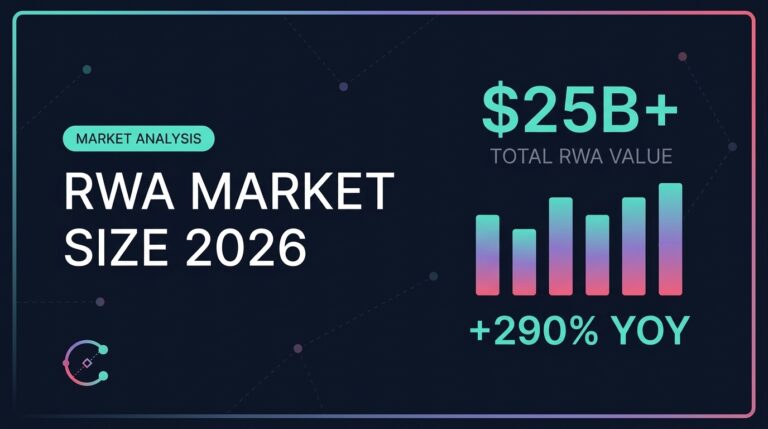
You can buy tokenized assets on both centralized exchanges and decentralized platforms in 2026, but knowing which platform fits your needs is the critical first step. The tokenized asset market has crossed $25 billion in on-chain value, with products ranging from US Treasury tokens yielding over 4% to fractionalized real estate starting at $50. Whether you are a first-time crypto investor or an experienced trader expanding into real world assets on the blockchain, this guide walks you through every step of the process.
This playbook covers where to buy tokenized assets, which platforms serve which investor profiles, how to complete a purchase from start to finish, what asset classes are available, and the risks and fees you need to understand before committing capital. By the end, you will have a clear framework for making your first purchase or expanding an existing portfolio into the tokenized economy.
Table of Contents
This guide begins with an overview of where to buy tokenized assets in 2026, covering centralized exchanges, specialized platforms, and decentralized protocols. It then provides a step-by-step buying process, reviews the available asset classes, and examines the risks and fees every investor should understand before they invest in tokenized assets.
Where to Buy Tokenized Assets in 2026
The landscape for platforms where you can buy tokenized assets has expanded significantly in 2026. Three categories of platforms now serve different investor profiles: centralized exchanges that offer familiar interfaces, specialized tokenization platforms that provide direct access to institutional products, and decentralized protocols that enable permissionless trading of RWA tokens. Choosing the right category is the first decision every investor must make.
Centralized Exchanges
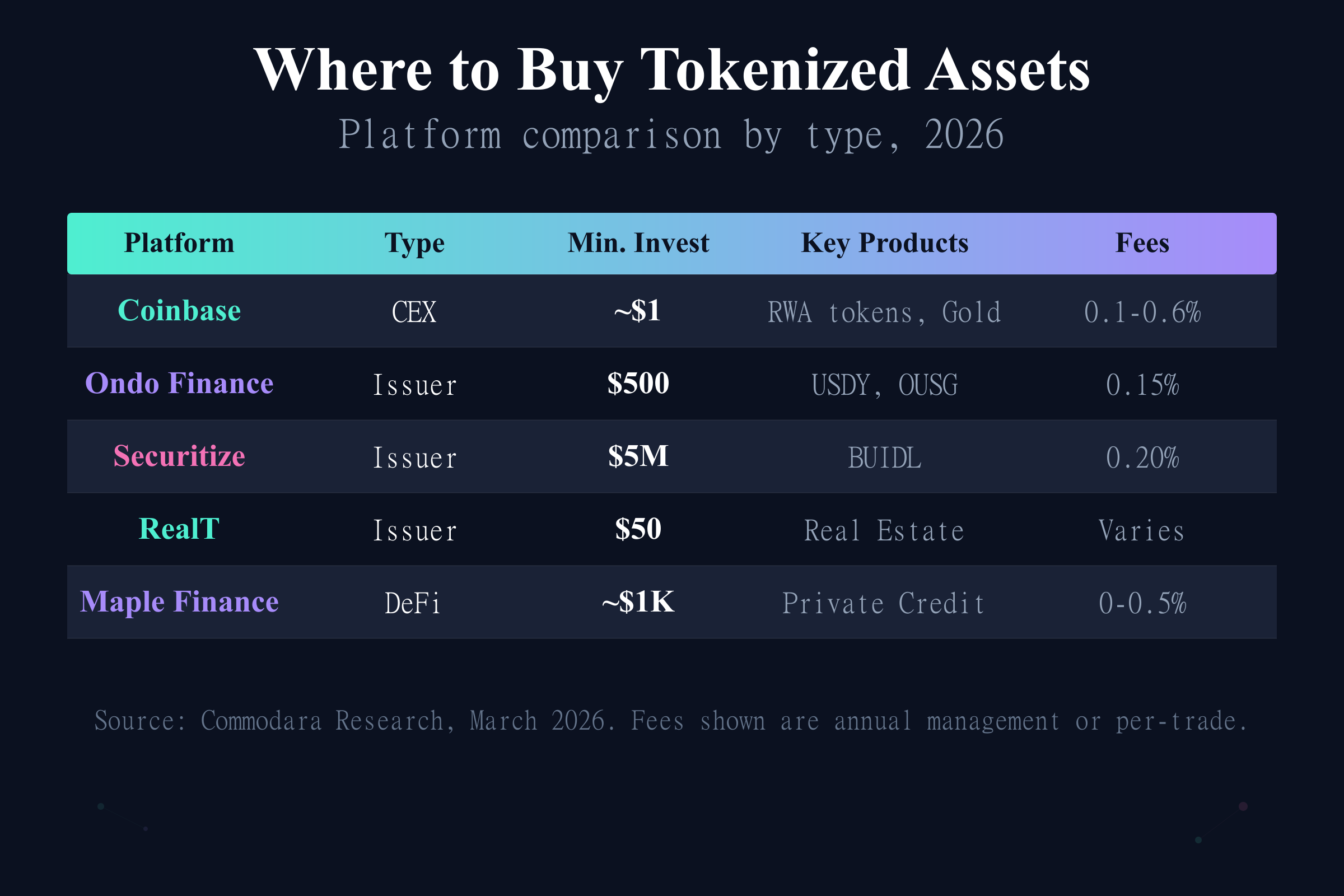
Centralized exchanges remain the most accessible entry point for retail investors looking to buy tokenized assets. Coinbase lists several RWA tokens including wrapped versions of tokenized treasury products. Binance has expanded its RWA section with tokenized gold and yield-bearing stablecoin products. According to CoinDesk, the number of tokenized products listed on major RWA exchanges in 2026 has tripled compared to 2024.
These platforms offer the lowest barrier to entry. Most require only a government-issued ID and a bank account to get started. Trading fees typically range from 0.1% to 0.6% per transaction. The trade-off is that centralized exchanges offer only a curated selection of tokenized products, not the full range available across the market. For investors who want to buy tokenized treasuries specifically, exchange availability varies by jurisdiction and product.
Specialized Tokenization Platforms
Specialized platforms like Ondo Finance, Securitize, and Backed Finance offer direct access to specific tokenized products with more transparent structures. Ondo’s USDY is available to non-US investors with a $500 minimum, providing tokenized treasury yield without requiring accredited investor status. Securitize serves as the issuance platform for BlackRock’s BUIDL fund, which requires a $5 million minimum and accredited investor qualification.
These platforms typically deliver higher yields and more direct exposure to underlying assets than exchange-listed products. They also enforce stricter compliance requirements, which can include accreditation checks, jurisdiction restrictions, and longer onboarding timelines. The institutional adoption of tokenization by BlackRock, JPMorgan, and DTCC has been built primarily on these specialized platforms, which signals their importance as long-term infrastructure.
Decentralized Protocols
Decentralized protocols like Centrifuge, Maple Finance, and various Ethereum-based DEXs allow investors to access tokenized products without intermediaries. Centrifuge enables lending against tokenized real-world collateral. Maple Finance offers structured credit products with yields above traditional fixed income. On decentralized exchanges, tokens like OUSG and USDY can be traded peer-to-peer with no central authority managing the order book.
The decentralized route offers the most flexibility but requires the most technical knowledge. Investors must manage their own wallets, understand gas fees, and evaluate smart contract risks independently. This path is best suited for crypto-native investors who are comfortable with self-custody and on-chain transactions. If you are new to this space, start with a centralized exchange before exploring decentralized options.
How to Buy Tokenized Assets: A Step-by-Step Guide
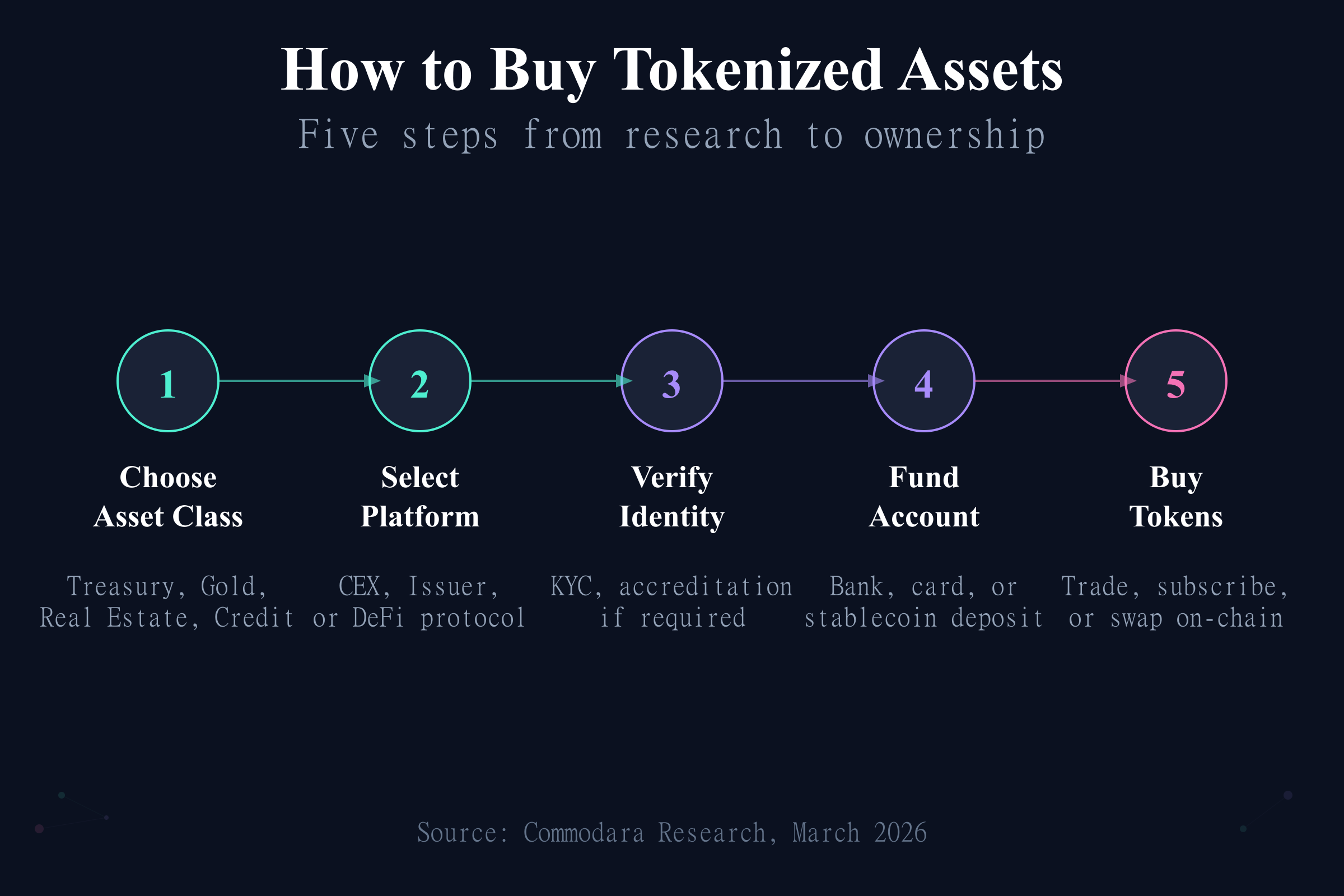
The process to buy tokenized assets follows a consistent pattern regardless of which platform you choose, though the specific requirements vary by platform type. Here is the framework that applies across centralized exchanges, specialized platforms, and decentralized protocols. Following these steps will help you avoid common pitfalls and complete your first purchase with confidence.
Choose Your Asset Class and Platform
The first decision is which type of tokenized asset you want to own. If you are seeking stable yield with minimal risk, tokenized treasuries from products like OUSG or BUIDL are the natural starting point. For commodity exposure, tokenized gold products like PAXG and XAUT offer direct ownership of physical gold stored in London vaults. For higher-yield opportunities with greater risk, tokenized private credit through platforms like Maple Finance is an option worth evaluating.
Once you have identified the asset class, match it to a platform. Coinbase and Binance work for retail investors seeking simple exposure. Ondo Finance and Securitize serve investors who want direct access to specific institutional products. Use the Commodara Tokenization Readiness Tool to evaluate which platforms align with your investor profile and jurisdiction.
Complete Verification and Fund Your Account
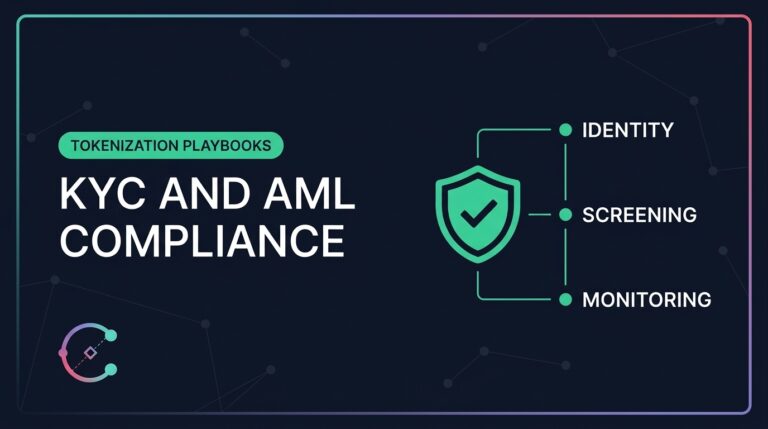
Every platform that allows you to buy tokenized assets requires identity verification. On centralized exchanges, this typically means uploading a government-issued ID and completing a selfie check. The process usually takes less than 24 hours. On specialized platforms like Securitize, verification can take several business days and may include accreditation checks for US investors seeking to invest in tokenized assets through regulated fund structures.
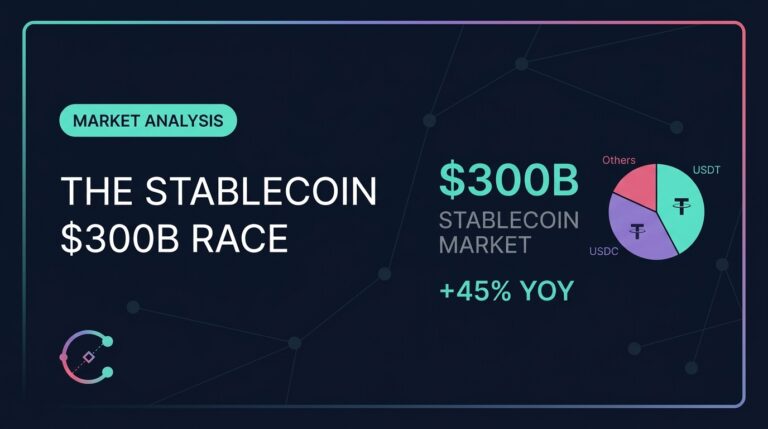
Funding methods vary by platform and jurisdiction. Most centralized exchanges accept bank transfers, credit cards, and cryptocurrency deposits. Specialized platforms typically require stablecoin deposits, usually USDC on Ethereum or Solana. The $300 billion stablecoin ecosystem now serves as the primary settlement layer for most tokenized products. Before funding your account, check which payment methods are available in your country and what minimum deposit amounts apply.
Execute Your Purchase and Secure Your Tokens
On centralized exchanges, buying tokenized assets works like any other trade: select the token, enter the amount, review the order, and confirm. On specialized platforms, the process may involve subscribing to a fund, which can include a waiting period for settlement. On decentralized protocols, you connect your wallet, approve the smart contract interaction, and execute the swap directly on-chain.
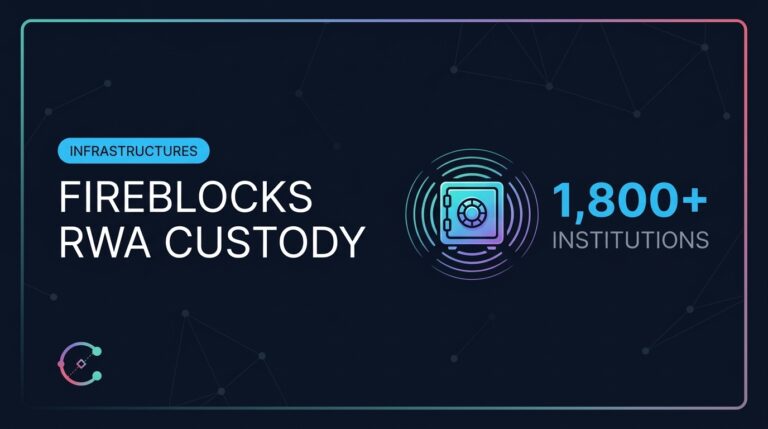
After purchase, consider where you will store your tokens. Exchange custody is the simplest option but carries counterparty risk. Self-custody in a hardware wallet like Ledger or Trezor gives you direct control but requires careful key management. Institutional-grade custody through providers like Fireblocks is available for larger portfolios. The right choice depends on your investment size and technical comfort level.
Tokenized Asset Classes Available to Buy in 2026
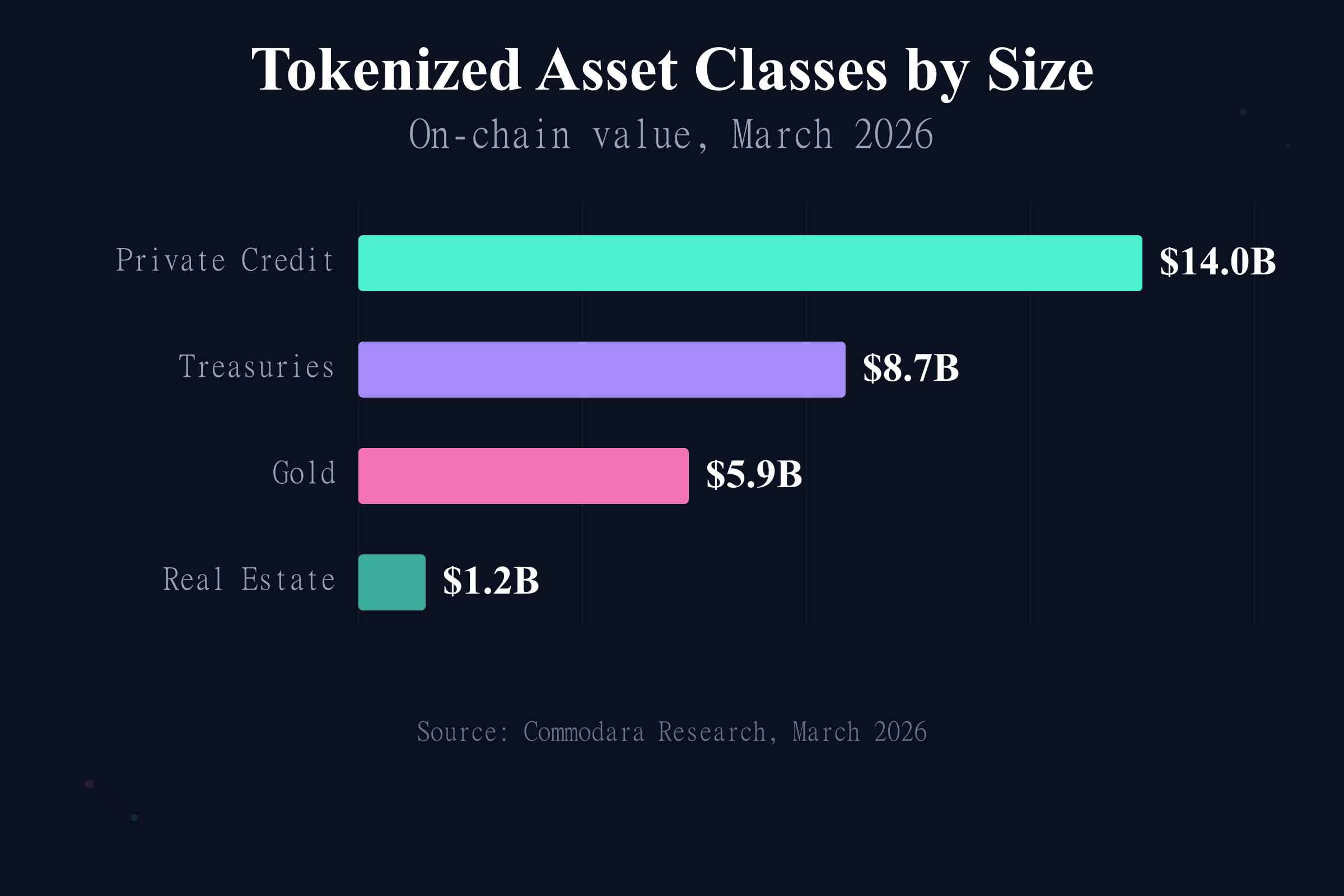
The range of assets you can buy as tokenized products in 2026 is broader than most investors realize. Six major categories now exceed $1 billion each in on-chain value, and the product landscape continues to expand. Understanding what is available helps you make informed allocation decisions. For a comprehensive overview of the entire market, see our guide to tokenized real world assets.
Tokenized Treasuries and Fixed Income
Tokenized treasuries are the largest and most accessible category for investors looking to buy tokenized assets. Products like BlackRock’s BUIDL, Ondo’s OUSG, Franklin Templeton’s BENJI, and Ondo’s USDY collectively represent over $4 billion in value. These products offer exposure to US government debt with yields typically ranging from 4.2% to 4.8%, settled on-chain within minutes rather than the traditional T+1 settlement cycle.
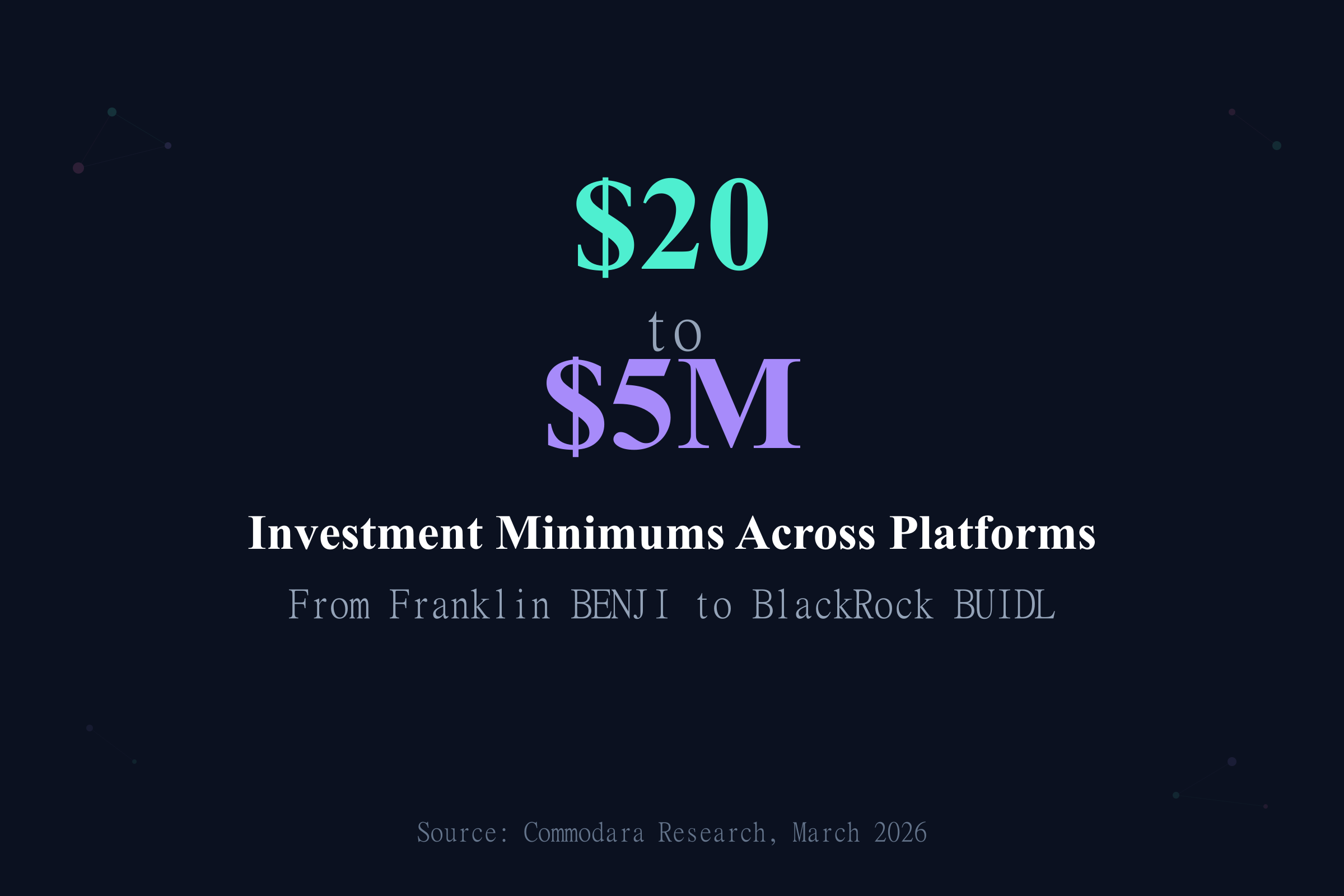
Minimum investments vary dramatically across providers. BENJI starts at just $20, making it the most accessible way to buy tokenized treasuries for retail investors. USDY requires $500, OUSG requires $5,000, and BUIDL requires $5 million. This range means there is a tokenized treasury product for virtually every investor profile, from retail newcomers to institutional allocators managing billions in assets.
Tokenized Gold and Commodities
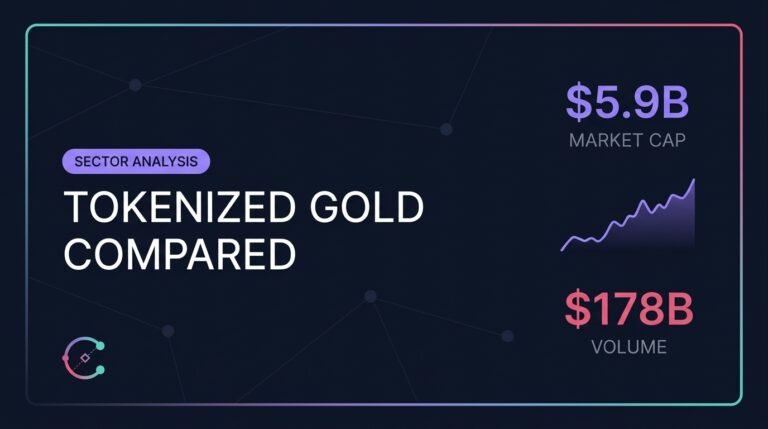
Tokenized gold represents $5.9 billion in market capitalization with $178 billion in annual trading volume. PAXG from Paxos and XAUT from Tether are the dominant products, each backed by physical gold stored in LBMA-accredited London vaults. Both tokens can be purchased on major exchanges including Coinbase and Binance, with no minimum beyond the exchange’s own thresholds.
Beyond gold, tokenized commodity products are emerging for silver, platinum, and agricultural assets, though these markets remain smaller and less liquid. For investors seeking inflation hedges and commodity diversification, tokenized gold remains the most mature and accessible option in the tokenized commodity space.
Real Estate and Private Credit On-Chain
Tokenized real estate platforms like RealT and Lofty allow investors to purchase fractional ownership in rental properties, with minimums as low as $50. These tokens generate yield through rental income distributed on-chain, typically on a monthly basis. The trade-off is limited liquidity, as secondary markets for real estate tokens remain thin in 2026.
On-chain private credit through platforms like Maple Finance and Centrifuge offers yields significantly above treasury rates, typically 6% to 12%, in exchange for higher credit risk. These products serve borrowers ranging from crypto trading firms to emerging market lenders. Investors should evaluate borrower credit quality carefully before committing capital to any private credit product.
Risks to Evaluate Before You Buy Tokenized Assets
Every investment carries risk, and tokenized assets are no exception. Before you buy tokenized assets, you need to understand the specific risks that apply to on-chain products. These risks differ from traditional investment risks in important ways, and informed investors evaluate them before committing any capital.
Smart Contract and Platform Risk
Tokenized assets depend on smart contracts for their core functionality: ownership records, transfer logic, compliance checks, and distribution payments. A vulnerability in a smart contract could freeze tokens, misdirect funds, or create exploitable weaknesses. Always verify that the smart contracts underlying any tokenized product have been independently audited by a reputable firm such as OpenZeppelin, Trail of Bits, or Certora.
Platform risk is equally important. If the platform that issued your tokens ceases operations, your ability to redeem the underlying asset depends entirely on the legal structure. Products issued through regulated entities with clear custodial arrangements, such as those registered with the US Securities and Exchange Commission, offer stronger investor protections than those issued by early-stage protocols with minimal legal infrastructure.
Liquidity and Redemption Constraints
Liquidity remains the most significant practical risk when you buy tokenized assets. While tokenized treasuries and gold can be traded on major exchanges with reasonable volume, many tokenized products trade on thin secondary markets. Exiting a position in tokenized private credit or real estate may take days or weeks, and you may not achieve the price you expect.
Redemption processes vary by product. Some tokenized treasury funds offer daily redemptions at net asset value. Others impose lock-up periods or redemption windows. Before you invest in tokenized assets, understand exactly how you can exit your position and what timeline applies. The gap between buying and selling ease is one of the most overlooked factors in this market.
Fees and Costs When You Buy Tokenized Assets
Understanding the full cost structure is essential when you buy tokenized assets. Fees come from multiple sources and can meaningfully impact net returns, particularly for smaller investments that are common among retail participants.
Platform trading fees range from 0.1% on major exchanges to 1% or more on specialized platforms. Many tokenized fund products charge annual management fees between 0.15% and 0.50%, deducted from yield. On-chain gas fees apply to every blockchain transaction; on Ethereum these can range from $2 to $50 depending on network congestion. Some platforms absorb gas costs for users, while others pass them through entirely.
Redemption fees are another consideration. Certain tokenized treasury products charge 0.10% to 0.25% on redemptions. Currency conversion fees apply if you are buying with a non-USD currency. For institutional investors, the impact of these fees is negligible relative to investment size. For retail investors purchasing smaller amounts, fees can materially reduce returns on short holding periods. Always calculate the total cost of ownership before committing to a platform or product.
Frequently Asked Questions
Where can I buy tokenized assets in 2026?
You can buy tokenized assets on centralized exchanges like Coinbase and Binance, specialized platforms like Ondo Finance and Securitize, and decentralized protocols like Centrifuge and Maple Finance. The best platform depends on your investor profile, jurisdiction, and the specific asset class you want to access.
What is the minimum amount needed to buy tokenized assets?
Minimums vary widely by product and platform. Tokenized real estate on RealT starts at $50. Franklin Templeton’s BENJI fund starts at $20. Ondo’s USDY requires $500. BlackRock’s BUIDL requires $5 million and accredited investor status. Centralized exchange minimums depend on the exchange itself, not the individual token.
Are tokenized assets regulated?
Most tokenized assets are classified as securities and are subject to securities regulation in their issuing jurisdiction. Platforms like Securitize are SEC-registered transfer agents. Products like BUIDL operate under SEC exemptions for qualified purchasers. Regulatory frameworks vary significantly by country, so investors should verify compliance status before purchasing.
Can I sell tokenized assets easily?
Liquidity depends on the specific product. Tokenized treasuries and gold trade on major exchanges with reasonable volume and can typically be sold within minutes. Tokenized real estate and private credit tokens have thinner secondary markets and may take longer to sell at a fair price. Always check trading volume and redemption terms before buying.
Do I need a crypto wallet to buy tokenized assets?
On centralized exchanges, you do not need your own wallet because the exchange provides custody. On specialized platforms and decentralized protocols, you typically need a self-custody wallet like MetaMask, Coinbase Wallet, or a hardware wallet such as Ledger. Some platforms also integrate with institutional custody providers like Fireblocks for larger investors.
The Bottom Line
The ability to buy tokenized assets has never been more accessible than it is in 2026. From $20 treasury tokens on Franklin Templeton’s BENJI to institutional-grade products on Securitize, the market offers entry points for virtually every investor profile. The platforms are maturing, the regulatory frameworks are taking shape, and the asset classes available continue to expand across treasuries, gold, real estate, and private credit.
The key to successful participation is informed decision-making. Choose your platform based on your investor profile and the specific asset class you want to access. Understand the fee structure, the liquidity constraints, and the redemption process before you commit capital. Verify the legal structure and smart contract audit status of every product you consider.
As the infrastructure for the tokenized economy continues to develop, the range of products and the ease with which investors can buy tokenized assets will only improve. Subscribe to the Commodara newsletter for weekly intelligence on new platforms, product launches, and regulatory developments that shape the market for tokenized real world assets.