
Central Banks Blockchain Settlement Rails Is Here – And Who Is Involved
The Central Bank Awakening: How They Are Building Tomorrow’s Payment Rails
First it was DTCC in the US. Now the Bank of England has embarked on the blockchain settlement race.
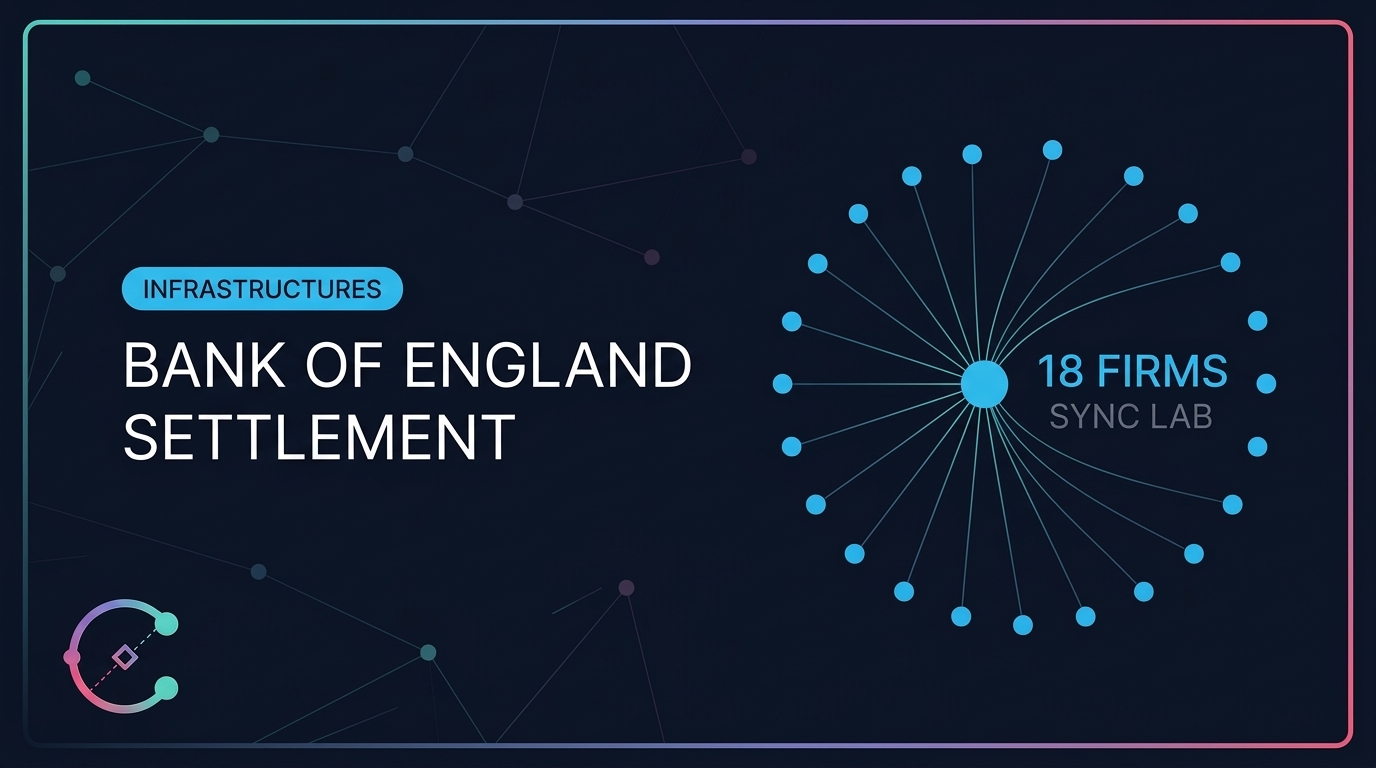
On February 10, 2026, the UK’s central bank announced the 18 firms selected for its Synchronisation Lab, a six-month experiment to test how tokenized assets can settle alongside central bank money.
The participant list reads like a who’s who of global financial infrastructure: Chainlink, Swift, London Stock Exchange Group, Partior, and 14 more.
This isn’t a research paper. This is central banks actively building the infrastructure that will power the next generation of financial markets.
Table of Contents
What’s Actually Happening
The Bank of England is upgrading its Real-Time Gross Settlement (RTGS) system, the backbone that processes every sterling payment between UK banks, to a next-generation platform called RT2.
The Synchronisation Lab is testing one critical question: can tokenized assets on distributed ledgers settle atomically with central bank money?
Atomic settlement means both sides of a transaction complete simultaneously, or neither does. There’s no counterparty risk because you don’t hand over cash before receiving the asset.
There are no settlement delays, as current T+1 or T+2 becomes T+0. And there’s no intermediary holding funds in between. Think of it like exchanging house keys and payment at the exact same moment, where neither party is ever exposed.
The Blockchain Settlement Timeline
The Bank of England has committed to a clear schedule. The Lab launches in spring 2026 with 18 participants across two cohorts. The testing period runs for six months across three eight-week phases.
An industry showcase and final report will be published by end of 2026. And a potential live RT2 synchronisation capability could follow in 2027 and beyond.
This is a simulation. No real money moves during the Lab. But the findings will directly inform how the UK’s financial system integrates on-chain settlement.
The 18 Participants: Who’s Building What
The Bank of England selected 18 organisations across 10 projects, spanning the full range of financial infrastructure.
On the decentralised settlement infrastructure side, Chainlink is testing decentralised settlement execution linking central bank money with on-chain securities using oracle technology.
UAC Labs AG joins with a similar mandate, exploring decentralised coordination models for atomic settlement.
Traditional financial infrastructure is well represented. Swift is testing cross-border FX settlement through payment-versus-payment models.
London Stock Exchange Group is working on tokenized bond settlement. And Partior is focused on cross-border and collateral transactions.
For tokenized securities, Ctrl Alt and Monee are building delivery-versus-payment for tokenized UK government bonds (gilts). Tokenovate and Atumly are testing conditional margin payments and digital currency issuance.
Real estate use cases are also included. LMS and PEXA are testing house purchase and remortgage transaction flows with HM Land Registry integration. Transpact is working on property sales and purchases.
Additional participants including ClearToken and Nuvante are testing collateral optimisation and repo facilities.
The diversity matters. Banks, fintechs, DLT firms, and market infrastructure providers are all at the same table. This isn’t a crypto experiment. It’s the entire financial ecosystem preparing for a fundamental shift.
Why Chainlink’s Selection Matters
Of all the announcements, Chainlink’s inclusion generated the most attention.
Chainlink isn’t a bank or a traditional market infrastructure provider. It’s a decentralised oracle network, the same technology that connects smart contracts to real-world data across DeFi.
The Bank of England selecting Chainlink signals that central banks are willing to test decentralised infrastructure for critical financial operations.
As Crypto Briefing reported, Chainlink will focus on developing decentralised settlement methods that link central bank funds with digitally issued securities, using its Cross-Chain Interoperability Protocol (CCIP) for messaging between systems and automated compliance verification.
Swift’s Involvement: The $5 Trillion Question
Swift processes approximately $5 trillion in cross-border payments daily. Their participation in the Synchronisation Lab focuses on one of the most valuable use cases: foreign exchange settlement.
Swift is testing payment-versus-payment for cross-border FX, ensuring cross-border interoperability with tokenized systems, and developing common messaging standards across platforms.
This builds on Swift’s previous blockchain experiments, where they tested integration models with Chainlink for messaging and data verification in industry pilots. The Synchronisation Lab takes that work and connects it directly to central bank infrastructure.
If Swift can make tokenized FX settlement work with central bank money, the implications are enormous: real-time, 24/7 currency settlement with reduced counterparty risk.
The Global Race: US vs UK vs Everyone Else
The Bank of England’s announcement comes just two months after DTCC received SEC approval to tokenize US Treasuries. The timing isn’t coincidental.
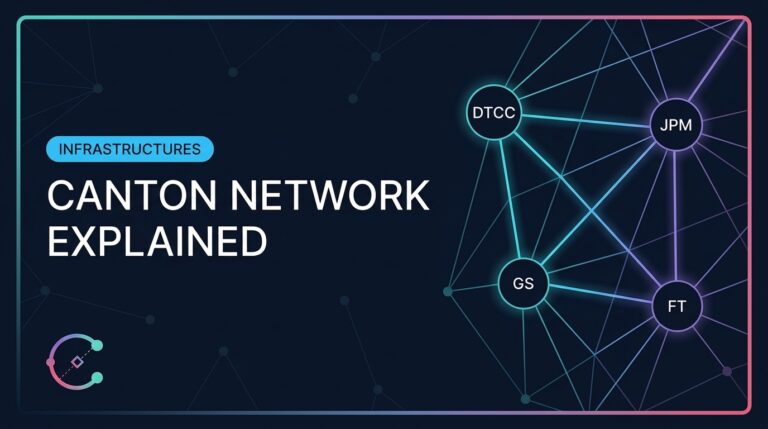
The approaches differ in important ways. The United States through DTCC is focused on tokenizing existing securities like Treasuries, equities, and ETFs on the Canton Network (permissioned, institutional), with an MVP in H1 2026 and broader rollout in H2, operating under a three-year SEC no-action letter.
The United Kingdom through the Bank of England is focused on settlement coordination between DLT and central bank money across multiple networks (Chainlink, proprietary platforms, and others), with the Lab running from spring through autumn 2026, connected to the Digital Securities Sandbox.
Other players to watch include Switzerland, where the Swiss National Bank has already enabled third-party RTGS triggers. Australia is already using similar synchronisation for property transaction settlement. And the ECB is running digital euro experiments with comparable objectives.
The UK is explicitly positioning itself as a hub for financial innovation. As Banking Exchange noted, the project builds on earlier experiments under Project Meridian which demonstrated that synchronized settlement is technically feasible, and the Lab now tests its scalability and business viability across diverse use cases.
Whoever solves atomic settlement first sets the standard for global finance.
What This Means for RWA Tokenization
If you’ve been following Commodara, you’ll recognise the pattern: infrastructure first, assets second.
The Synchronisation Lab validates several trends we’ve covered. Central banks are actively building, not just researching.
The Bank of England isn’t publishing papers, it’s running a hands-on test with real participants. Decentralised infrastructure is being taken seriously, with Chainlink’s selection proving that oracle networks have earned institutional credibility.
Settlement is the bottleneck everyone wants to solve, with DTCC, Bank of England, and Swift all focused on the same problem. And real-world use cases are front and centre, including house purchases, FX settlement, and bond trading, not DeFi experiments.
The infrastructure being built in 2026 will determine how trillions of dollars in assets move for the next decade.
The Bottom Line
Central banks don’t move fast. When they do, it signals something important.
In December, DTCC announced it’s tokenizing US Treasuries. In February, the Bank of England revealed 18 firms testing atomic settlement with central bank money.
The message is clear. The debate about whether blockchain belongs in financial infrastructure is over. The question now is who builds the rails, and how fast. The winners will set standards for global finance.
The UK’s Synchronisation Lab isn’t just a test. It’s an audition for the future of settlement.
Welcome to Commodara, your edge in real world assets.
If this analysis helped you understand what’s happening at the infrastructure level, share it with someone in finance, payments, or capital markets who needs to see the bigger picture. And if you’re new here, this is where we track the moves that matter in the tokenized economy.
Frequently Asked Questions
What is the Bank of England Synchronisation Lab?
The Synchronisation Lab is a six-month experimental program launched by the Bank of England in spring 2026, selecting 18 firms to test how tokenized assets on distributed ledgers can settle atomically with central bank money through the UK’s next-generation RTGS system called RT2. Participants include Chainlink, Swift, London Stock Exchange Group, and Partior.
What is atomic settlement and why does it matter?
Atomic settlement means both sides of a financial transaction, the payment and the asset transfer, complete simultaneously or neither does. This eliminates counterparty risk, removes settlement delays (moving from T+1 or T+2 to T+0), and removes the need for intermediaries holding funds between parties. Central banks view it as the foundation for next-generation financial market infrastructure.
Why was Chainlink selected for the Bank of England’s blockchain pilot?
Chainlink is a decentralised oracle network that connects smart contracts to real-world data. The Bank of England selected it to test decentralised settlement execution linking central bank money with on-chain securities. Its inclusion signals that central banks are willing to integrate decentralised infrastructure into critical financial operations, not just permissioned institutional platforms.
How does the UK’s approach compare to the US DTCC tokenization?
The US through DTCC focuses on tokenizing existing securities (Treasuries, equities) on the permissioned Canton Network under a three-year SEC no-action letter. The UK through the Bank of England focuses on settlement coordination between multiple DLT platforms and central bank money, testing with a broader range of technologies including decentralised networks. Both aim for 2026 milestones but approach the problem from different angles.
Will the Synchronisation Lab use real money?
No. The Lab operates in a simulated environment and will not process live payments. All testing occurs in a controlled setting that mirrors real-world settlement flows. However, the findings will directly inform the Bank of England’s design decisions for a potential future live synchronisation capability, with a possible production rollout in 2027 and beyond.