
MiCA Tokenization and Regulation: Europe’s Framework for Digital Assets
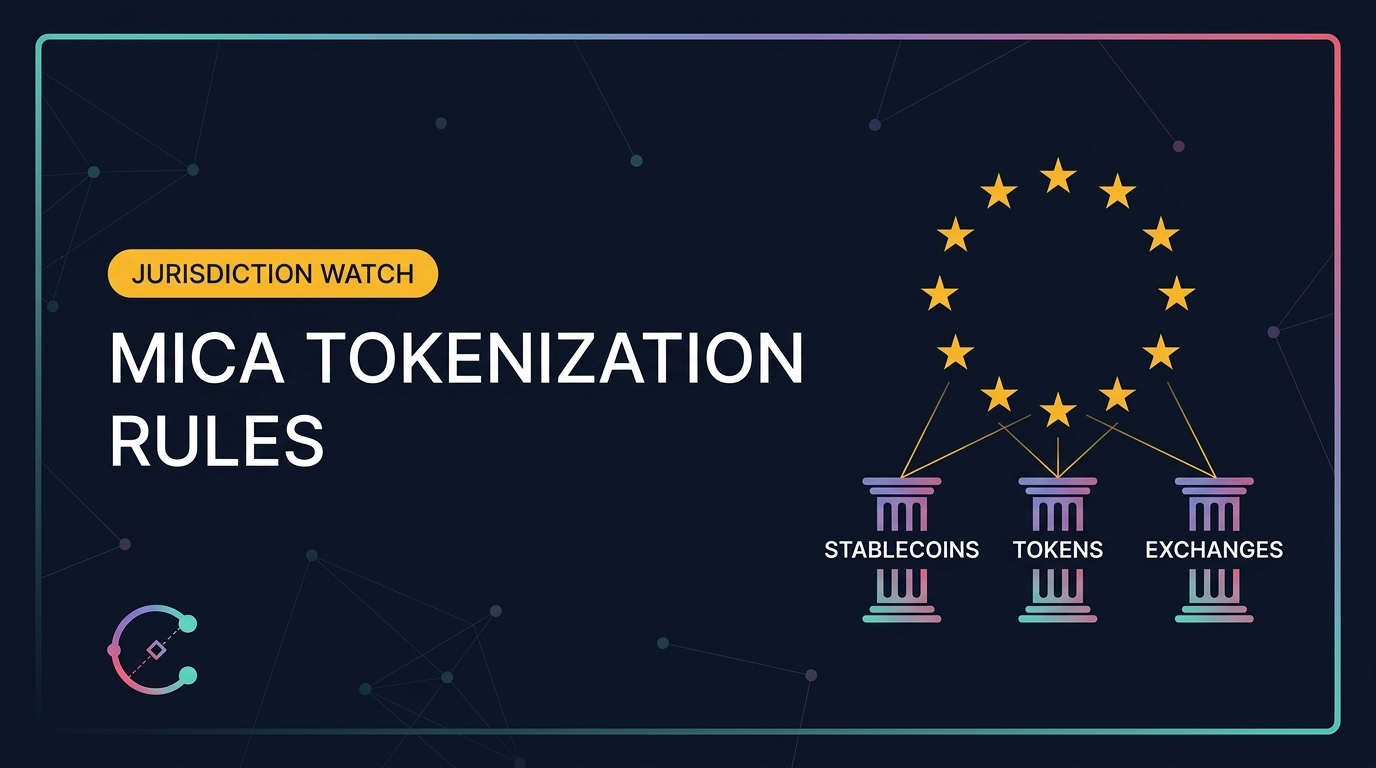
MiCA tokenization rules are now fully in effect across the European Union, making it the most comprehensive regulatory framework for digital assets anywhere in the world. The Markets in Crypto-Assets Regulation, which entered its final implementation phase in December 2024, establishes uniform licensing requirements, consumer protections, and operational standards for crypto-asset service providers across all 27 EU member states. For issuers and investors operating in the tokenized asset market, MiCA represents both a compliance obligation and a competitive advantage.
This article explains what MiCA covers, how its provisions specifically affect tokenized real world assets, what the stablecoin rules mean for settlement infrastructure, and how issuers outside Europe must adapt when distributing tokenized products to EU investors. Whether you are an asset owner evaluating European distribution, an industry builder designing compliant infrastructure, or an institutional decision-maker assessing the regulatory landscape, understanding MiCA tokenization requirements is now essential for operating in or accessing the European market.
What Is MiCA and What Does It Cover?
MiCA is a regulation of the European Parliament and Council that creates a harmonized legal framework for crypto-assets across the European Union. Before MiCA, each EU member state applied its own interpretation of existing financial regulations to crypto-assets, creating a fragmented compliance landscape that varied dramatically from Germany to France to Malta. MiCA replaces this patchwork with a single set of rules that apply uniformly across the bloc.
The regulation covers three categories of crypto-assets. Asset-referenced tokens are crypto-assets that maintain a stable value by referencing multiple currencies, commodities, or other assets. E-money tokens are crypto-assets that reference a single fiat currency, essentially the EU’s definition of stablecoins pegged to the euro or other currencies. Utility tokens are crypto-assets that provide access to a service or product. Notably, MiCA explicitly excludes financial instruments that are already regulated under existing EU securities law, which means that most tokenized securities fall outside MiCA’s scope and under MiFID II instead.
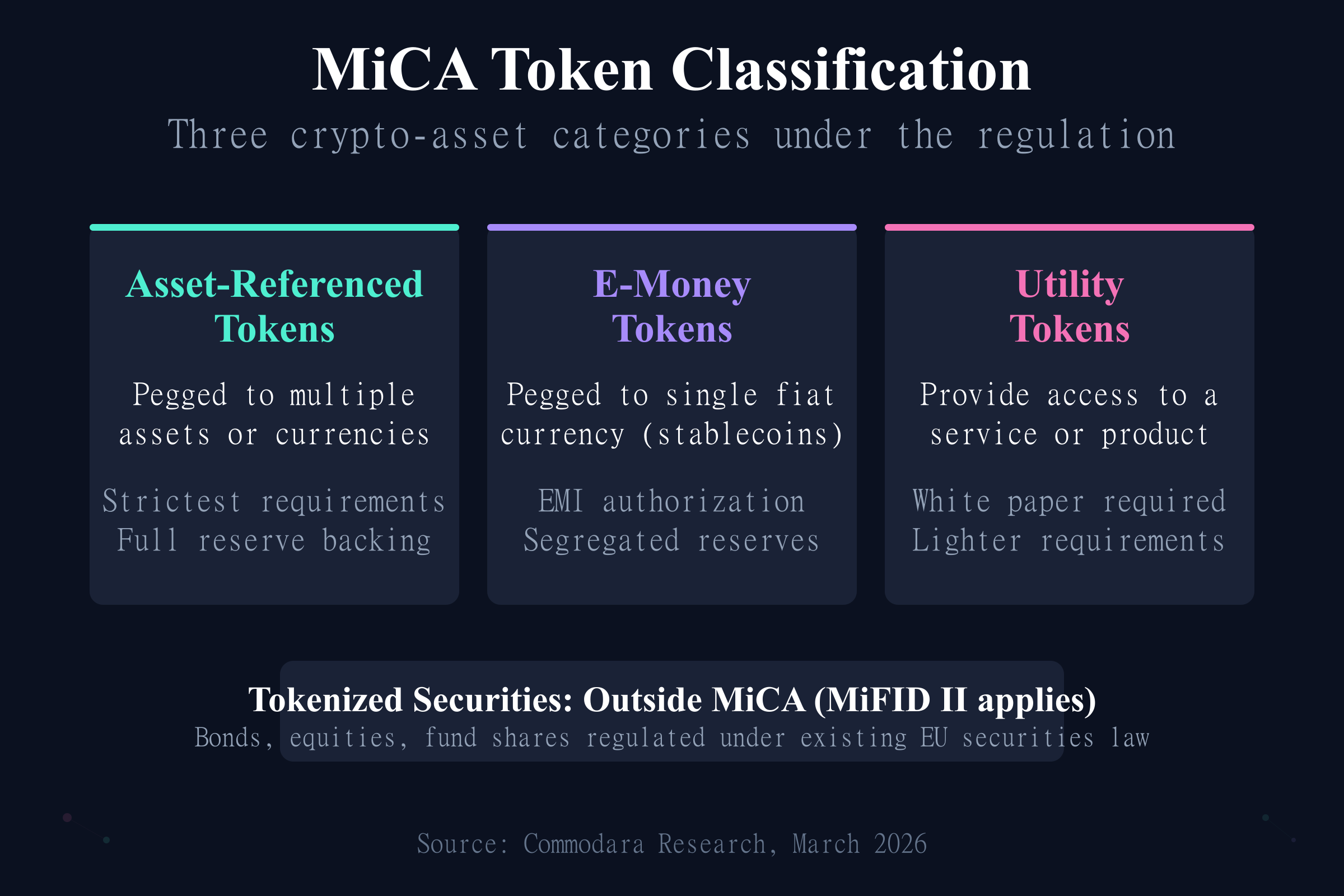
This distinction is critical for the MiCA tokenization landscape. A tokenized euro-denominated stablecoin used for settlement falls under MiCA. A tokenized bond or equity security falls under MiFID II. A utility token that provides access to a DeFi protocol falls under MiCA. Understanding which regulatory framework applies to a specific token determines the licensing requirements, disclosure obligations, and operational standards that the issuer must meet.
How MiCA Tokenization Rules Affect the RWA Market
The impact of MiCA tokenization rules on the real world asset market operates through three primary channels: stablecoin regulation that affects settlement infrastructure, crypto-asset service provider licensing that affects platforms, and cross-border passporting that affects distribution.
Stablecoin Regulation Under MiCA
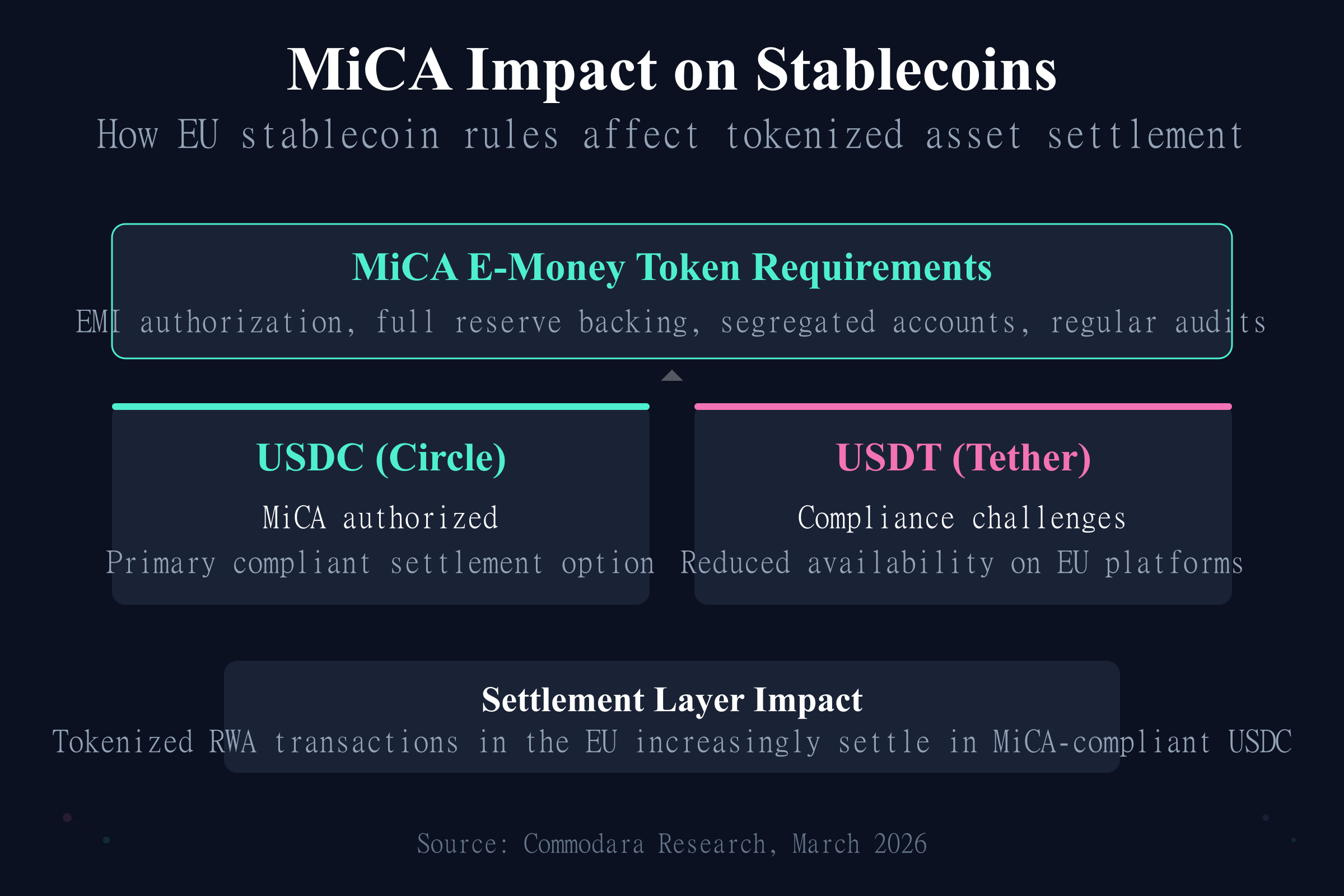
MiCA’s stablecoin provisions are the most immediately consequential for the tokenized asset market. The regulation requires all e-money token issuers operating in the EU to obtain authorization as electronic money institutions and to maintain reserves that fully back the outstanding token supply. These reserves must be held in segregated accounts at EU-regulated credit institutions, with regular audits and public disclosures.
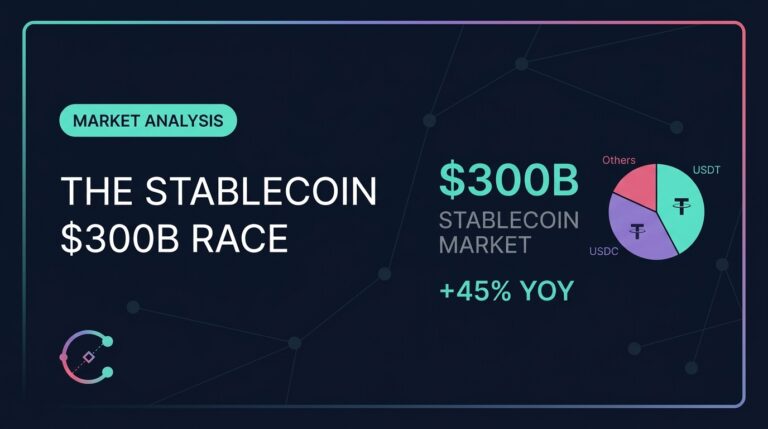
For the tokenized asset market, these rules directly affect the settlement layer. Most tokenized products settle in stablecoins, primarily USDC and USDT. Under MiCA, any stablecoin used within the EU must comply with the regulation’s requirements or face restrictions on its availability. Circle has obtained EU authorization for USDC under MiCA, positioning it as the compliant settlement option for European tokenized asset transactions. Tether’s USDT has faced more challenges in meeting MiCA compliance requirements, which has reduced its availability on EU-regulated platforms.
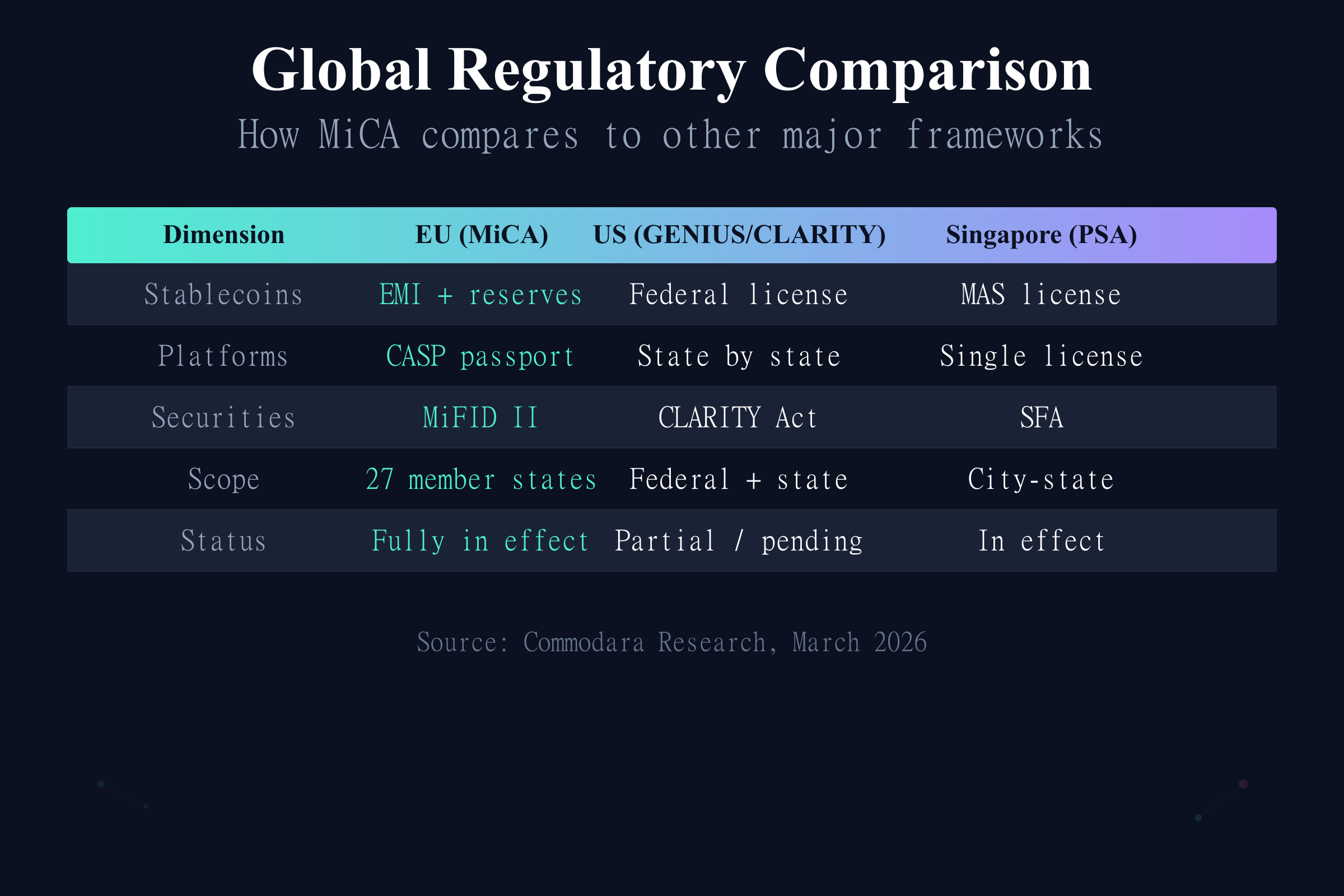
The parallel between MiCA’s stablecoin rules and the US GENIUS Act stablecoin framework is notable. Both frameworks require full reserve backing, mandate regular attestations, and establish licensing requirements for stablecoin issuers. This convergence between US and EU stablecoin regulation is creating a more predictable global environment for tokenized asset settlement, although the specific requirements differ in details that affect cross-border operations.
Crypto-Asset Service Provider Licensing
MiCA establishes a comprehensive licensing regime for crypto-asset service providers (CASPs). Any entity that operates a trading platform, provides custody services, offers portfolio management, or facilitates the exchange of crypto-assets within the EU must obtain CASP authorization from the national competent authority in its home member state. Once authorized, the CASP receives a passport that allows it to operate across all 27 EU member states without additional licensing.
This passporting mechanism is one of the most significant advantages of the MiCA tokenization framework for platforms and issuers. Before MiCA, a tokenization platform that wanted to operate across Europe needed separate licenses or registrations in each country where it offered services. Under MiCA, a single CASP authorization provides access to the entire EU market of 450 million people. This efficiency has attracted several major platforms to establish their EU operations and seek CASP authorization, recognizing that a single license unlocks continent-wide distribution.
For tokenized asset platforms specifically, MiCA compliance creates a moat. The cost and time required to obtain CASP authorization, including capital adequacy requirements, governance standards, and ongoing supervision, creates barriers to entry that favor well-capitalized, compliance-oriented platforms. This dynamic is accelerating the professionalization of the European tokenized asset market and attracting institutional-grade infrastructure providers.
Impact on Tokenized Securities
While MiCA does not directly regulate tokenized securities (which fall under MiFID II), the regulation indirectly affects the tokenized securities market in several important ways. The stablecoin provisions govern the settlement instruments used in tokenized securities transactions. The CASP licensing requirements affect the platforms that custody and trade tokenized securities alongside other crypto-assets. And the regulatory clarity that MiCA provides has increased institutional confidence in the broader European digital asset ecosystem, which benefits tokenized securities issuers operating in that market.
The European Securities and Markets Authority (ESMA) is also developing additional guidance on how existing securities regulations apply to tokenized instruments. The DLT Pilot Regime, which runs alongside MiCA, allows regulated market operators to experiment with blockchain-based securities settlement under modified regulatory requirements. Together, MiCA and the DLT Pilot Regime are creating a comprehensive regulatory architecture for both crypto-assets and tokenized securities in Europe. The tokenized stock infrastructure being built by major exchanges globally is influenced by the standards that MiCA and the DLT Pilot Regime are establishing.
MiCA Compliance Requirements for Issuers
Issuers of tokenized products who want to access the EU market must understand which MiCA compliance requirements apply to their specific token type. The requirements differ significantly between asset-referenced tokens, e-money tokens, and utility tokens, and they differ again for tokenized securities that fall under MiFID II instead.
White Paper Requirements
MiCA requires issuers of crypto-assets to publish a detailed white paper before offering tokens to the public or seeking admission to trading. The white paper must include a description of the issuer, the crypto-asset, the underlying technology, the rights and obligations attached to the token, the risks involved, and the environmental impact of the consensus mechanism used. This requirement is similar in concept to a securities prospectus but is specifically designed for crypto-assets.
The white paper must be notified to the relevant national competent authority at least 20 working days before publication. The authority does not approve the white paper, which distinguishes MiCA from securities regulations that require prospectus approval, but it can require modifications if the document is incomplete or misleading. For MiCA tokenization projects, this white paper requirement creates a minimum standard of disclosure that protects investors and provides regulatory transparency.
Reserve and Capital Requirements
Asset-referenced token issuers face the strictest requirements under MiCA, including maintaining reserves that fully back the outstanding token supply, holding own funds equal to at least the higher of 350,000 euros or 2% of the average reserve assets, and establishing robust governance and risk management frameworks. E-money token issuers must comply with the existing Electronic Money Directive requirements in addition to MiCA-specific provisions.
These capital and reserve requirements ensure that issuers have the financial resources to operate sustainably and to honor redemption requests from token holders. For the MiCA tokenization market, these requirements favor institutional issuers with established financial resources and governance structures, while creating challenges for smaller or startup-stage projects that may lack the capital to meet the regulatory thresholds.
Cross-Border Implications: Non-EU Issuers Accessing Europe
For issuers based outside the European Union, MiCA creates both opportunities and obligations. The regulation does not prevent non-EU issuers from offering tokenized products to EU investors, but it requires that such offerings comply with MiCA’s rules. In practice, this typically means partnering with an EU-authorized CASP to distribute tokens, ensuring that any stablecoins used for settlement comply with MiCA’s e-money token provisions, and publishing a white paper that meets MiCA standards.
The CLARITY Act in the US and MiCA in the EU represent the two most consequential regulatory frameworks for the global tokenized asset market. Issuers who design their token structures to comply with both frameworks position themselves for distribution across the world’s two largest regulated capital markets. This dual-compliance approach is becoming the standard for institutional issuers who want to maximize their addressable investor base.
The interaction between MiCA and other jurisdictional frameworks is still evolving. How MiCA-authorized CASPs interact with platforms in Singapore, the UAE, the UK, and other markets that have their own regulatory frameworks will determine the efficiency of cross-border tokenized asset distribution. Issuers should monitor these developments and structure their compliance strategies with cross-border flexibility in mind. The Commodara Tokenization Readiness Tool can help issuers evaluate their compliance posture across multiple jurisdictions including the EU.
Challenges and Criticisms of MiCA
Despite its comprehensiveness, MiCA has faced criticism from several directions. DeFi protocols argue that the regulation’s focus on identifiable issuers and service providers does not adequately address fully decentralized systems where no single entity controls the protocol. The regulation includes limited provisions for DeFi, leaving significant regulatory uncertainty for decentralized applications that do not fit the traditional issuer-service provider model.
Some industry participants have criticized MiCA’s environmental disclosure requirements, which mandate that white papers include information about the environmental impact of the consensus mechanism. While this requirement aligns with EU sustainability goals, it adds compliance costs and may disadvantage protocols that use proof-of-work consensus compared to proof-of-stake alternatives.
The timeline for CASP authorization has also drawn criticism. The process of obtaining a license can take 6 to 12 months, which creates a competitive disadvantage for new market entrants compared to grandfathered entities that were operating under national regimes before MiCA took effect. This timeline pressure has led some platforms to accelerate their EU licensing efforts while others have chosen to wait and observe how the regulatory landscape settles before committing resources to MiCA compliance.
Frequently Asked Questions
What is MiCA and when did it take effect?
MiCA is the EU’s Markets in Crypto-Assets Regulation, creating a harmonized framework for crypto-assets across all 27 member states. The stablecoin provisions took effect in June 2024, and the full regulation including CASP licensing took effect in December 2024. MiCA tokenization rules are now fully operational.
Does MiCA regulate tokenized securities?
MiCA does not directly regulate tokenized securities, which fall under existing EU securities regulations like MiFID II. However, MiCA affects tokenized securities indirectly through stablecoin settlement rules, CASP licensing for platforms, and the overall regulatory environment for digital assets in Europe.
How does MiCA affect stablecoins used in tokenization?
MiCA requires all e-money token issuers in the EU to obtain authorization, maintain full reserve backing, and undergo regular audits. Stablecoins that do not comply face restrictions on EU-regulated platforms. Circle’s USDC has obtained MiCA authorization; Tether’s USDT faces compliance challenges in the EU.
Can non-EU issuers offer tokenized products in Europe under MiCA?
Yes, but they must comply with MiCA requirements. This typically means partnering with an EU-authorized CASP for distribution, ensuring compliant stablecoin settlement, and publishing a MiCA-compliant white paper. Dual compliance with both MiCA and US regulations is becoming the institutional standard.
What is a CASP under MiCA?
A CASP is a Crypto-Asset Service Provider authorized under MiCA to operate trading platforms, provide custody, offer portfolio management, or facilitate crypto-asset exchanges in the EU. A single CASP authorization provides a passport to operate across all 27 EU member states.
The Bottom Line
MiCA tokenization rules represent the most comprehensive regulatory framework for digital assets in the world. By establishing uniform standards for stablecoin issuance, crypto-asset service provider licensing, and cross-border passporting across 27 member states, MiCA has created a regulatory environment that is both demanding and advantageous for compliant participants. The framework raises the bar for operational standards while providing the regulatory certainty that institutional capital requires.
For the tokenized asset market specifically, MiCA’s impact is felt most through the stablecoin settlement layer and the CASP licensing requirements that govern platform operations. Issuers and platforms that achieve MiCA compliance gain access to the entire EU market through a single license, while those that cannot meet the requirements face restricted access to one of the world’s largest regulated investor bases.
As MiCA implementation matures and regulatory bodies issue additional guidance, the framework will continue to shape how tokenized products are designed, distributed, and managed in Europe. Subscribe to the Commodara newsletter for ongoing coverage of MiCA developments and their implications for the global tokenized economy.