
The Race to Lead Tokenized Stocks in America – NYSE, Nasdaq, and DTCC
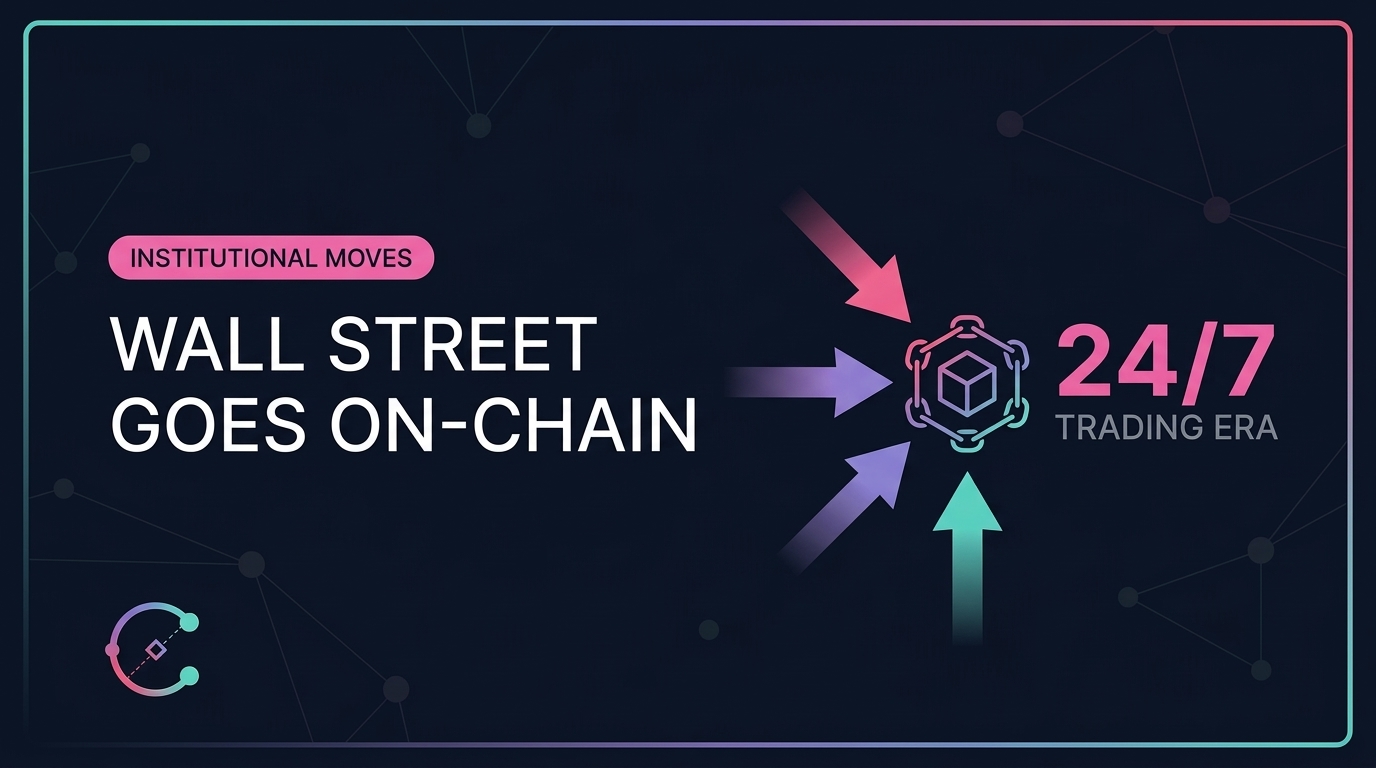
Wall Street Goes On-Chain: How NYSE and Nasdaq Are Racing to Tokenize Every Stock in America
On January 19, 2026, NYSE revealed it’s building a blockchain-powered platform for 24/7 trading and instant settlement of tokenized stocks and ETFs.
Four days later, Nasdaq filed Amendment No. 2 with the SEC to enable tokenized securities trading on its exchange.
And both are building on infrastructure that DTCC, which clears over $2.4 quadrillion annually, received SEC approval to tokenize in December.
This isn’t a pilot program. This isn’t a research paper. This is the biggest transformation in market infrastructure since electronic trading.
Table of Contents
Three Giants, Three Approaches, One Goal To Tokenize Stocks
Within 60 days, three of the most powerful institutions in global finance announced tokenization initiatives. Each is taking a different path to the same destination: bringing stocks on-chain.
NYSE: The Separate Venue Strategy
NYSE President Lynn Martin made headlines at the World Liberty Forum on February 18 when she said the exchange felt a “responsibility” to enter the tokenization space. But the foundation was laid a month earlier.
On January 19, NYSE announced the development of a new, separate venue specifically for tokenized securities.
The platform will enable 24/7 trading (no more waiting for the bell), instant settlement at T+0 instead of T+1, dollar-denominated orders (buy $100 of Apple, not 0.47 shares), stablecoin-based funding, and multi-chain support for settlement and custody.
The platform combines NYSE’s existing Pillar matching engine, the technology that powers their current trading, with blockchain-based post-trade systems.
Tokenized shares will be fully fungible with traditional securities and carry the same dividends, voting rights, and governance privileges.
ICE, NYSE’s parent company, is also working with BNY and Citi to support tokenized deposits across its clearinghouses. This would let clearing members transfer and manage money outside traditional banking hours, critical for a 24/7 trading environment.
Nasdaq: The Integration Strategy
Nasdaq is taking a fundamentally different approach. Instead of building a separate venue, they want to add tokenization as an option within their existing exchange.
On January 20, 2026, Nasdaq filed Amendment No. 2 with the SEC to amend its rules for tokenized securities trading, building on their original September 2025 application.
Nasdaq’s model works differently from NYSE’s. Investors choose between traditional or tokenized at the post-trade level. Trading happens on the same exchange, same order book. DTC handles the backend tokenization after the trade. Both forms have identical value, rights, and CUSIP numbers.
The key difference: NYSE is building a new venue for a new asset class. Nasdaq is retrofitting tokenization into existing infrastructure.
On February 21, Nasdaq posted a job listing for a “Digital Asset Tokenization Product Manager,” a clear signal that this initiative is accelerating.
DTCC: The Infrastructure Layer
Neither NYSE nor Nasdaq could move forward without DTCC.
The Depository Trust and Clearing Corporation is the backbone of U.S. securities markets. Its subsidiary, DTC, provides custody for securities valued at over $100 trillion and processes the clearing and settlement for nearly every trade in America.
On December 11, 2025, DTCC received a No-Action Letter from the SEC, effectively approval to launch a three-year tokenization pilot. DTCC can now tokenize Russell 1000 stocks (the 1,000 largest U.S. public companies), major index ETFs (S&P 500, Nasdaq-100 trackers), and U.S. Treasury bills, bonds, and notes.
On December 17, DTCC announced a partnership with Digital Asset Holdings to tokenize U.S. Treasury securities on the Canton Network. The minimum viable product is targeted for H1 2026, with the broader service rolling out in H2 2026.
DTCC is now co-chair of the Canton Foundation alongside Euroclear, positioning it to influence global standards for tokenized securities.
The Challenger: Robinhood’s Own Blockchain
While the giants build on existing infrastructure, Robinhood is taking a different bet: building its own blockchain from scratch.
On February 11, 2026, Robinhood launched the public testnet for “Robinhood Chain” at Consensus Hong Kong. It’s an Ethereum Layer 2 built on Arbitrum, designed specifically for tokenized real-world assets.
The platform enables 24/7 trading of tokenized stocks and ETFs, self-custody through Robinhood Wallet, access to DeFi applications on Ethereum, and compliance controls embedded at the chain level.
Robinhood has already minted nearly 2,000 tokenized U.S. stocks and ETFs for European users, totaling around $17 million in value. The mainnet is expected to launch by the end of 2026.
CEO Vlad Tenev has been vocal about why this matters. On the 5th anniversary of the GameStop trading halt in January, Tenev argued that tokenization could prevent similar market disruptions by enabling real-time settlement instead of the current T+1 system that caused massive collateral demands.
Why Is This Happening Now?
Three forces are converging to make 2026 the tipping point.
Regulatory clarity arrived. SEC Chairman Paul Atkins has made tokenization a priority. The SEC’s January 28 statement on tokenized securities established a clear taxonomy, and the DTCC no-action letter created a regulatory pathway for the first time.
Competitive pressure is real. Crypto-native platforms like Ondo Global Markets and xStocks have already tokenized over $500 million in equities each. Robinhood’s European tokenized stocks, while smaller at $17 million, proved the model works. Traditional exchanges can’t afford to cede this ground.
Infrastructure readiness finally exists. DTCC’s tokenization service, built on the Canton Network with Digital Asset Holdings, provides the institutional-grade backend that NYSE and Nasdaq need. The rails are in place.
What This Means for Investors
If these initiatives succeed, several things change fundamentally.
Markets could run continuously rather than 6.5 hours a day, five days a week. Breaking news at 3am means you can trade on it. Instant settlement frees up capital that’s currently locked for a day after every trade under T+1.
Fractional ownership becomes native, letting you buy $10 of Berkshire Hathaway (currently around $700,000 per share) without complex workarounds.
Smart contracts can automate dividend distributions, handle corporate actions, and enable new financial products that don’t exist today. And geographic barriers collapse, as an investor in Singapore can trade U.S. stocks at 2am local time with instant settlement.
The Timeline
Based on official announcements, here’s what to watch. DTCC launches its MVP for tokenized U.S. Treasuries on the Canton Network in H1 2026.
DTCC’s broader tokenization service covering Russell 1000 stocks, ETFs, and Treasuries goes live in H2 2026. NYSE targets the launch of its tokenized securities venue in late 2026, pending regulatory approval.
Robinhood Chain mainnet is expected to launch by end of 2026. And Nasdaq’s tokenized trading could potentially become available by Q3 2026 based on its original SEC filing.
The Bigger Picture
If you’ve been following Commodara, you’ll notice the pattern accelerating. We covered BlackRock, JPMorgan, and DTCC announcing institutional tokenization moves.
Then the Bank of England selecting 18 firms including Chainlink and Swift for settlement testing. Now NYSE, Nasdaq, and DTCC are building the rails for every U.S. stock to go on-chain.
The RWA market is now at $24.83 billion and growing. But that number becomes almost irrelevant when you consider what’s coming: the Russell 1000 alone represents over $45 trillion in market capitalization.
If even a fraction of that moves on-chain, we’re talking about a fundamental restructuring of global finance.
The Bottom Line
The New York Stock Exchange is 234 years old. Nasdaq is 55 years old. DTCC has been the backbone of U.S. markets for over 50 years.
All three just announced they’re going on-chain.
The message is unmistakable. The debate about whether tokenization belongs in financial markets is over.
The only questions left are who builds the rails, how fast, and who captures the value. By the end of 2026, tokenized trading of U.S. securities will likely be live on multiple platforms.
We’re watching the biggest transformation in market infrastructure since trading went electronic. And it’s happening right now.
Welcome to Commodara, your edge in real world assets.
If this breakdown helped you see the full picture of what’s happening on Wall Street, share it with someone in finance or investing who needs to understand where this is heading. And if you’re new here, this is where we track the moves that matter in the tokenized economy.
Frequently Asked Questions
What is NYSE’s tokenized securities platform?
NYSE announced on January 19, 2026 that it is developing a new, separate venue for trading tokenized stocks and ETFs. The platform will enable 24/7 trading, instant T+0 settlement, dollar-denominated orders, stablecoin-based funding, and multi-chain support. Tokenized shares will be fully fungible with traditional securities and carry the same dividends, voting rights, and governance privileges. The launch is pending regulatory approval.
How does Nasdaq’s tokenization approach differ from NYSE’s?
NYSE is building a separate venue specifically for tokenized assets. Nasdaq is integrating tokenization into its existing exchange, allowing investors to choose between traditional or tokenized settlement on a trade-by-trade basis using the same order book and CUSIP numbers. DTC handles the backend tokenization after the trade executes, meaning nothing changes from the trading perspective.
What can DTCC tokenize under its SEC no-action letter?
DTCC received SEC approval on December 11, 2025 for a three-year tokenization pilot covering Russell 1000 stocks (the 1,000 largest U.S. public companies), major index ETFs including S&P 500 and Nasdaq-100 trackers, and U.S. Treasury bills, bonds, and notes. The broader tokenization service is expected to go live in the second half of 2026.
What is Robinhood Chain?
Robinhood Chain is an Ethereum Layer 2 blockchain built on Arbitrum, launched as a public testnet in February 2026. It’s designed for tokenized real-world assets including stocks and ETFs, with 24/7 trading, self-custody through Robinhood Wallet, and compliance controls embedded at the chain level. Robinhood has already minted nearly 2,000 tokenized U.S. stocks and ETFs for European users.
When will tokenized stock trading be available in the US?
Based on official announcements, DTCC’s tokenization service for Russell 1000 stocks and ETFs is expected in H2 2026. Nasdaq’s tokenized trading could be available as early as Q3 2026 pending SEC approval. NYSE is targeting late 2026 for its tokenized venue launch. Robinhood Chain mainnet is also expected by end of 2026. Multiple platforms could offer tokenized U.S. securities trading before the year is out.