
Tokenization Distribution Strategy: Why Most Tokenized Assets Fail to Find Buyers
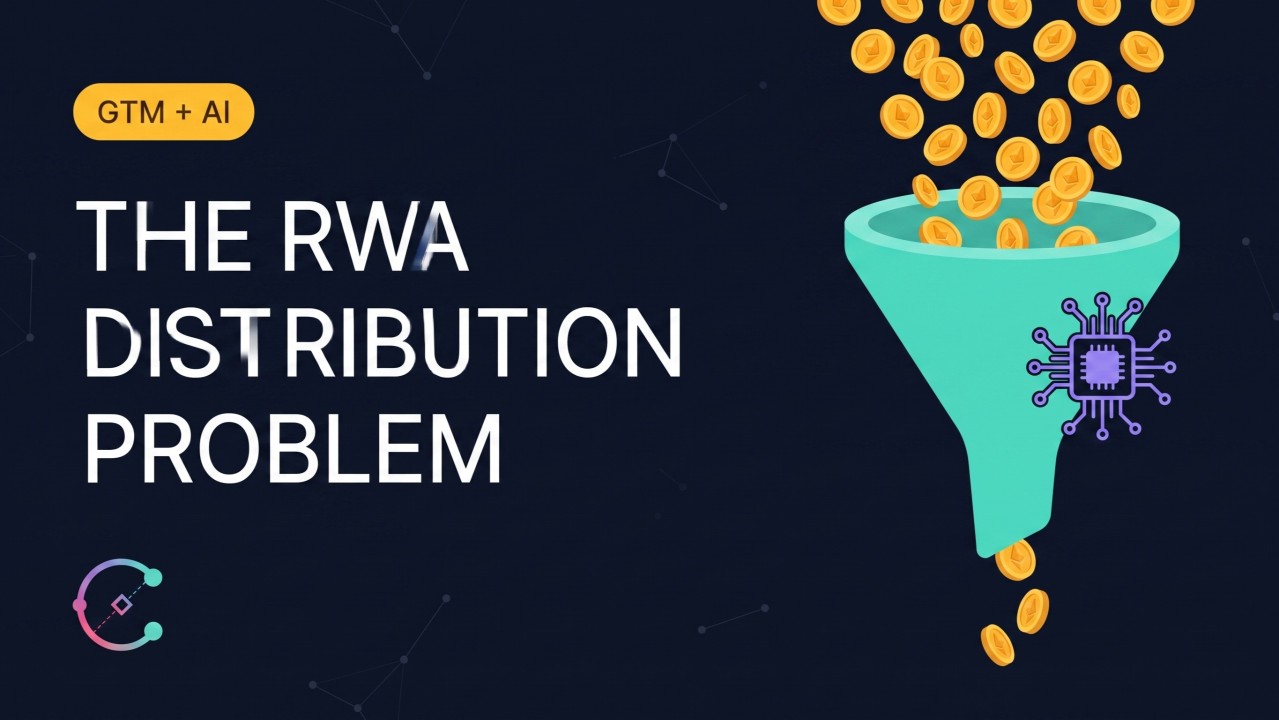
Tokenization distribution strategy is the discipline the RWA market keeps ignoring, and the data proves it: the majority of tokenized assets show low trading volumes, long holding periods, and negligible secondary activity. Issuers spend six figures on legal structuring, smart contract development, and compliance infrastructure, then discover they have built a product with no path to a buyer.
Tokenization is an issuance technology, not a distribution channel. This guide explains why the distribution gap exists, what a real tokenization distribution strategy contains, the channels that actually work, and how AI is changing the economics of reaching investors.
Table of Contents
This guide opens with why the distribution gap exists and the assumption that created it. It then sets out the four components of a working tokenization distribution strategy, examines the channels that reach real buyers, and explains how AI is changing go-to-market economics. The closing sections cover how to sequence distribution against issuance, followed by the most common questions and the bottom line.
Why the Distribution Gap Exists
The distribution gap traces back to a single flawed assumption: that tokenization creates its own demand. The reasoning went that if an illiquid asset becomes divisible, transferable, and available globally, buyers would naturally appear. They have not.
Tokenization solves supply-side problems. It reduces minimum investment sizes, enables fractional ownership, automates compliance, and makes transfers technically instant. None of those things tells a single investor that the asset exists, explains why it is worth owning, or persuades them to complete an onboarding process. Availability is not demand.
The result is visible across the market. Assets sit in wallets, secondary volumes stay negligible, and issuers conclude that the technology underdelivered when the actual failure was commercial. This is the demand-side counterpart to the structural barriers described in our analysis of why tokenized assets still cannot trade, and the two problems reinforce each other.
There is also a budget explanation. As our breakdown of the real economics of tokenization sets out, distribution is the largest hidden cost in the entire process and the one most often omitted from the plan. Issuers budget for legal and technology, exhaust the budget getting to launch, and have nothing left for the work of finding investors.
Market research supports the pattern. Distribution data compiled by research groups including Binance Research consistently shows tokenized assets concentrated in a small number of products with real distribution behind them, while the long tail of offerings attracts minimal participation. The gap is not evenly spread; it is the default outcome for anyone who does not plan for it.
The Four Components of a Tokenization Distribution Strategy
A working tokenization distribution strategy has four parts, and most failed offerings are missing at least three of them.
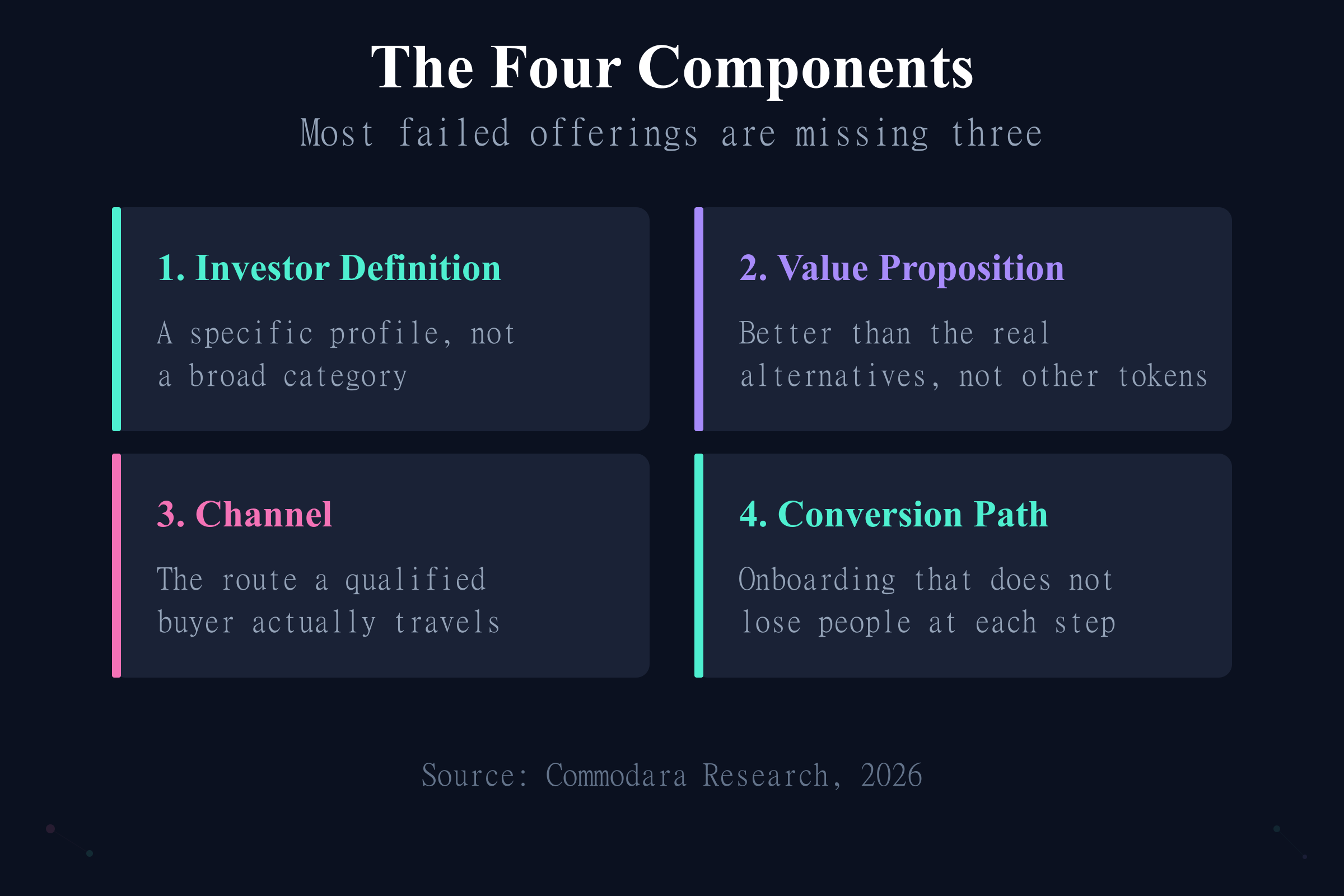
The first is investor definition. Not a category like accredited investors, but a specific profile: who they are, what they already own, what problem this asset solves for them, and what would make them switch. An offering aimed at everyone reaches no one, and the compliance constraints on tokenized securities make broad targeting expensive as well as ineffective.
The second is the value proposition against alternatives. A tokenized property competes with property funds, listed real estate, and direct ownership, not with other tokens. If the tokenized version does not offer better access, lower minimums, superior transparency, or genuine liquidity, it has no reason to win, and the word tokenized supplies none of those on its own.
The third is the channel: the specific route through which a qualified investor encounters the offering and converts. The fourth is the conversion path itself, the sequence from first contact through onboarding, verification, and funding. Every step of that path loses people, and tokenized offerings often have longer and more intrusive onboarding than the traditional products they compete with.
Onboarding friction deserves particular attention because it is measurable and fixable. An investor who has decided to buy still has to pass identity verification, prove eligibility, fund a wallet, and complete a subscription. Each step drops a share of the people who reached it, and a process with five steps at eighty percent completion each converts fewer than a third of committed buyers. Most issuers have never measured this.
The Channels That Actually Work
Distribution channels for tokenized assets fall into four categories with very different economics. A complete tokenization distribution strategy usually combines more than one, since no single channel reliably fills a raise on its own.
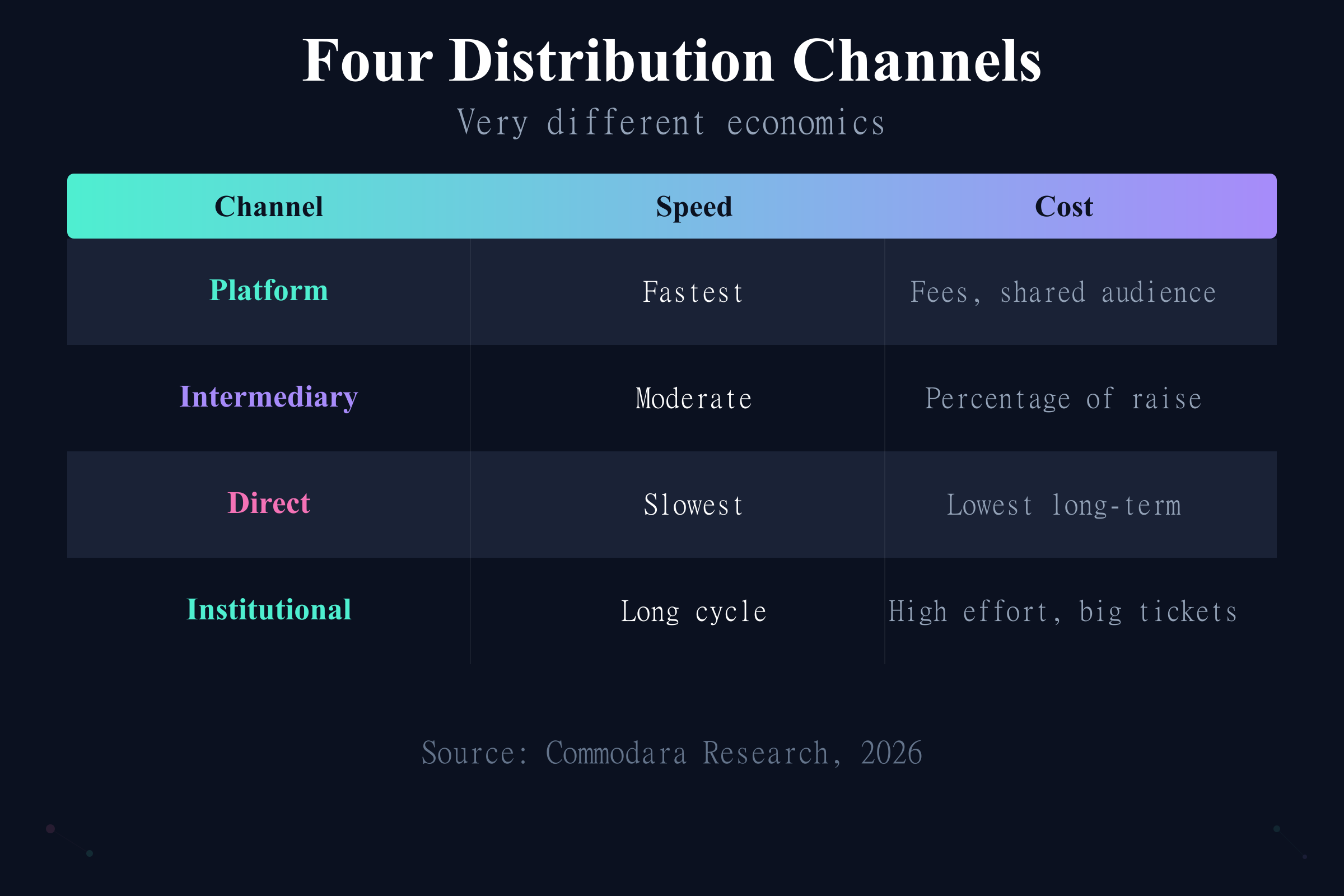
Platform distribution means listing on a tokenization platform that already has an investor base, which is the fastest route to real buyers. It also means accepting the platform’s fees and its audience. Our comparison of the leading tokenization platforms covers how their distribution reach differs, which matters more than their technical features for an issuer whose constraint is demand.
Intermediary distribution uses wealth managers, family offices, and placement agents who already hold relationships with qualified investors. It is the traditional route, it works, and it costs a percentage. For larger raises this is often the most efficient path, because the intermediary supplies the trust that a new issuer lacks.
Direct distribution means building an audience through content, research, and community. It is slow and requires sustained effort, but it produces the lowest acquisition cost per investor over time and creates an asset the issuer owns rather than rents. It suits issuers planning multiple offerings rather than a single raise.
Institutional distribution targets funds and treasuries directly, involving long sales cycles, formal due diligence, and the custody and compliance requirements those buyers impose. The tickets are large enough to justify the effort, but only if the offering can survive the scrutiny described in our framework for evaluating any tokenized asset.
How AI Changes Distribution Economics
The economics of reaching investors have historically made small tokenized offerings unviable, and this is where AI has the clearest impact.
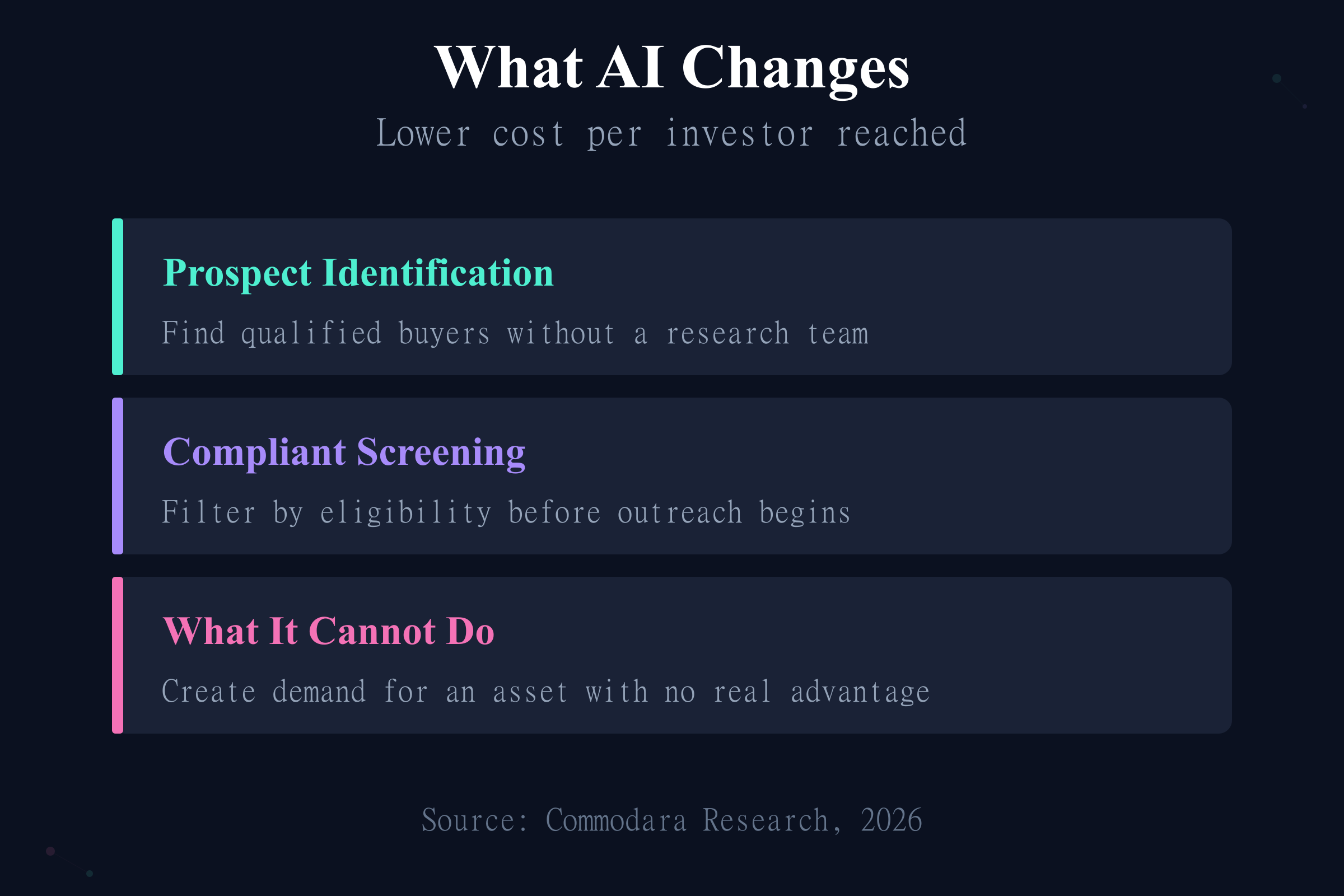
Identifying qualified prospects, personalizing outreach, answering diligence questions, and screening investors for eligibility have all been labor-intensive tasks with high fixed costs. Automating them lowers the cost per investor reached, which changes the minimum viable size of an offering. Deals too small to justify a sales team become distributable.
The compliance dimension matters just as much. Tokenized securities cannot be marketed indiscriminately, since eligibility varies by jurisdiction and investor type. Automated screening that filters an audience before outreach makes targeted distribution compliant at a scale manual processes could not support, turning a regulatory constraint into a routine step.
What AI does not do is create demand. It reduces the cost of reaching the right people and improves conversion, but if the underlying offering has no genuine advantage over its alternatives, better targeting only helps the market reject it more efficiently.
The benchmarks are worth studying. Go-to-market research from organizations such as Pavilion tracks conversion rates, sales cycle lengths, and acquisition costs across comparable industries, and tokenized offerings tend to underperform those benchmarks badly. Measuring against an external standard is more useful than comparing one tokenized raise to another, because the whole category is underperforming.
Sequencing Distribution Against Issuance
The single most useful change an issuer can make is when they start thinking about distribution.
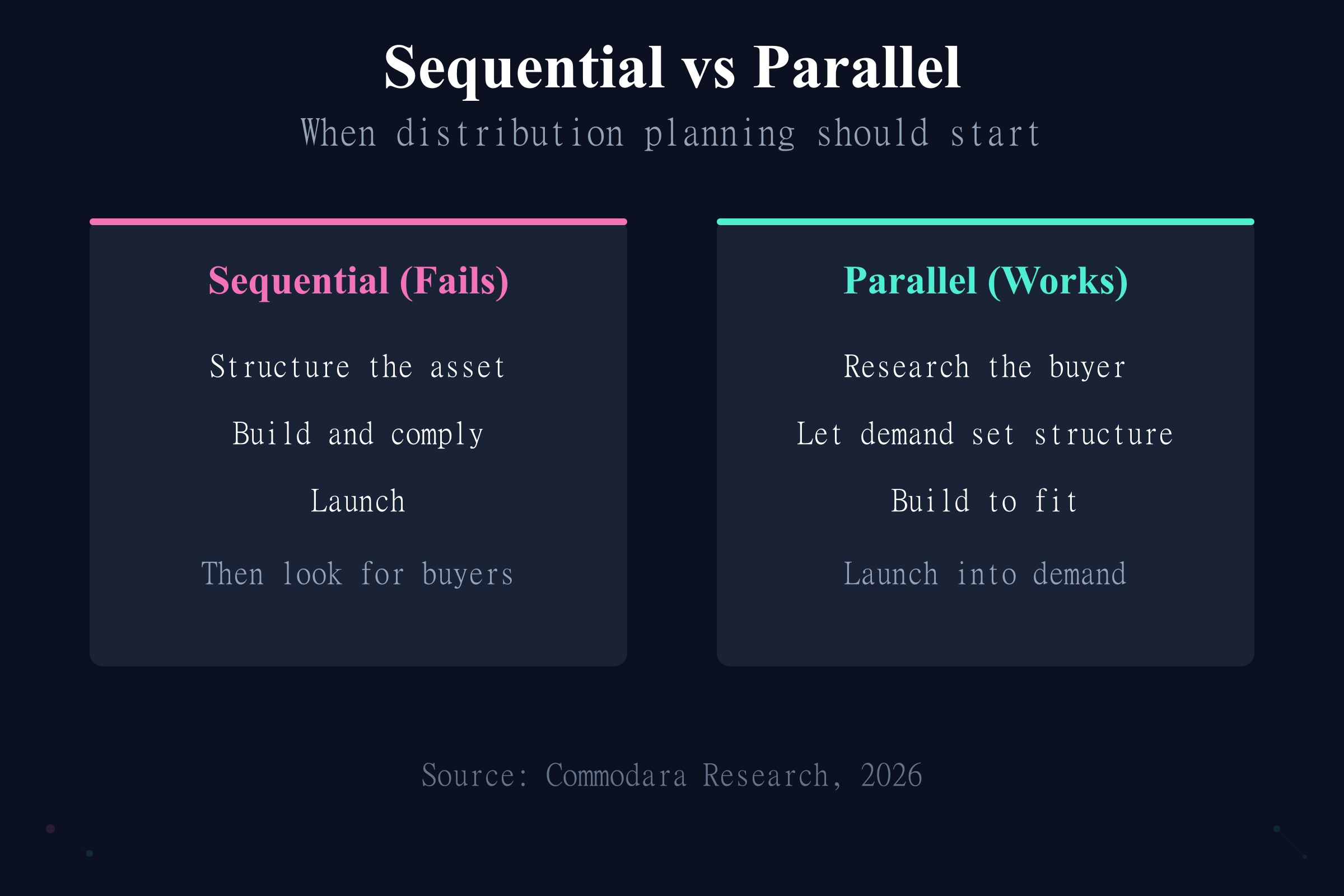
The failing pattern is sequential: structure the asset, build the technology, achieve compliance, launch, then begin looking for investors. By that point the structure is fixed, and if it turns out that the target investors need a different minimum, a different jurisdiction, or a different liquidity profile, changing it means starting over.
The working pattern is parallel. Distribution research happens before structuring, so that investor requirements shape the structure rather than being discovered after it is set. If the intended buyers are European family offices, that determines jurisdiction, minimum size, reporting format, and custody arrangements. Structure follows demand rather than the reverse.
In practice this means doing unglamorous work early: talking to twenty prospective investors before drafting the offering documents, and asking what would actually make them buy rather than whether they find the concept interesting. Interest is not demand, and the difference between the two accounts for a large share of tokenized offerings that launched into silence.
Before committing to a structure, it is worth running the plan through a structured assessment. The Tokenization Readiness Tool covers distribution alongside jurisdiction and structure, and you can estimate the full cost of tokenizing and distributing an asset so the go-to-market budget is set before the legal work begins rather than after it has consumed the funds.
Frequently Asked Questions
What is a tokenization distribution strategy?
A tokenization distribution strategy is the plan for reaching and converting investors into holders of a tokenized asset. It defines the specific investor profile, the value proposition against alternatives, the channels used to reach them, and the conversion path from first contact through onboarding and funding.
Why do most tokenized assets fail to find buyers?
Because issuers assume tokenization creates demand. Tokenization solves supply-side problems such as divisibility and transferability, but it does not tell investors the asset exists or why it is worth owning. Most offerings also exhaust their budget on legal and technology work before funding distribution.
What is the best distribution channel for tokenized assets?
It depends on raise size and time horizon. Platform listing is fastest but costs fees and cedes the audience. Intermediaries work well for larger raises. Direct audience building has the lowest long-term cost but is slow. Institutional distribution offers large tickets with long sales cycles.
How does AI help with tokenized asset distribution?
AI lowers the cost of identifying qualified prospects, personalizing outreach, and screening for eligibility, which reduces the minimum viable size of an offering. It also makes compliant targeting practical at scale. It does not create demand for an asset that lacks a genuine advantage.
When should distribution planning start?
Before structuring, not after launch. Investor requirements should shape jurisdiction, minimum size, reporting, and custody decisions. Issuers who structure first and seek investors later frequently discover the structure does not match what their target buyers need, at which point changing it is expensive.
The Bottom Line
Tokenization distribution strategy is the difference between an asset that is technically on-chain and one that is actually owned. The industry built impressive issuance infrastructure on the assumption that demand would follow supply, and the flat secondary volumes across the market are the evidence that it does not.
The fix is neither novel nor technical. Define the investor precisely, articulate why the tokenized version is better than the alternatives, select channels deliberately, and build a conversion path that does not lose people at every step. These are ordinary go-to-market disciplines that tokenization has largely skipped.
AI improves the economics of all of it, but it amplifies rather than replaces the underlying strategy. Before your next issuance, treat tokenization distribution strategy as a first-order design input and use the Commodara Tokenization Readiness Tool to pressure-test the plan, or book a consultation to work through it against your specific asset.