
Tokenization Structures Explained: SPV, Feeder Fund, Debt Token, and Direct Issuance
Tokenization structures are the legal architecture underneath every tokenized asset, and choosing between an SPV, feeder fund, debt token, or direct issuance determines what investors actually own. The token on a screen is only the visible layer. Beneath it sits a legal structure that defines investor rights, regulatory treatment, tax exposure, and what happens if the issuer fails.
Most tokenization projects treat this decision as an afterthought, then discover that the structure they chose limits which investors can participate and how the asset can trade. This guide breaks down the four tokenization structures that dominate the market, what each one gives investors, how they are regulated, and how to choose the right one for a specific asset.
Table of Contents
This guide opens with what tokenization structures are and why the choice matters. It then profiles the four dominant models in turn: the special purpose vehicle, the feeder fund, the debt token, and direct issuance. The closing sections compare the structures side by side, walk through how to choose the right one for a given asset, and answer the most common questions before the bottom line.
What Are Tokenization Structures?
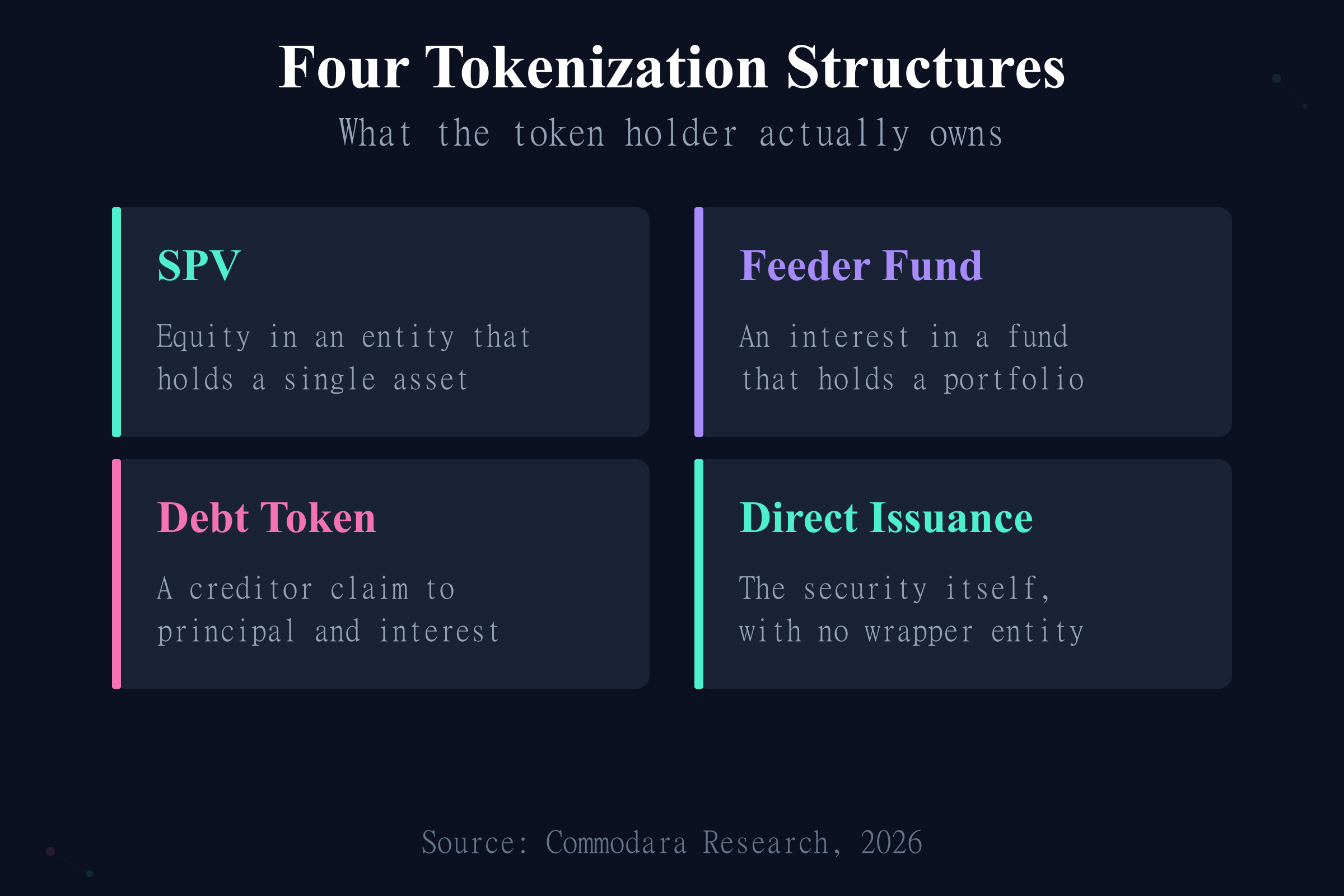
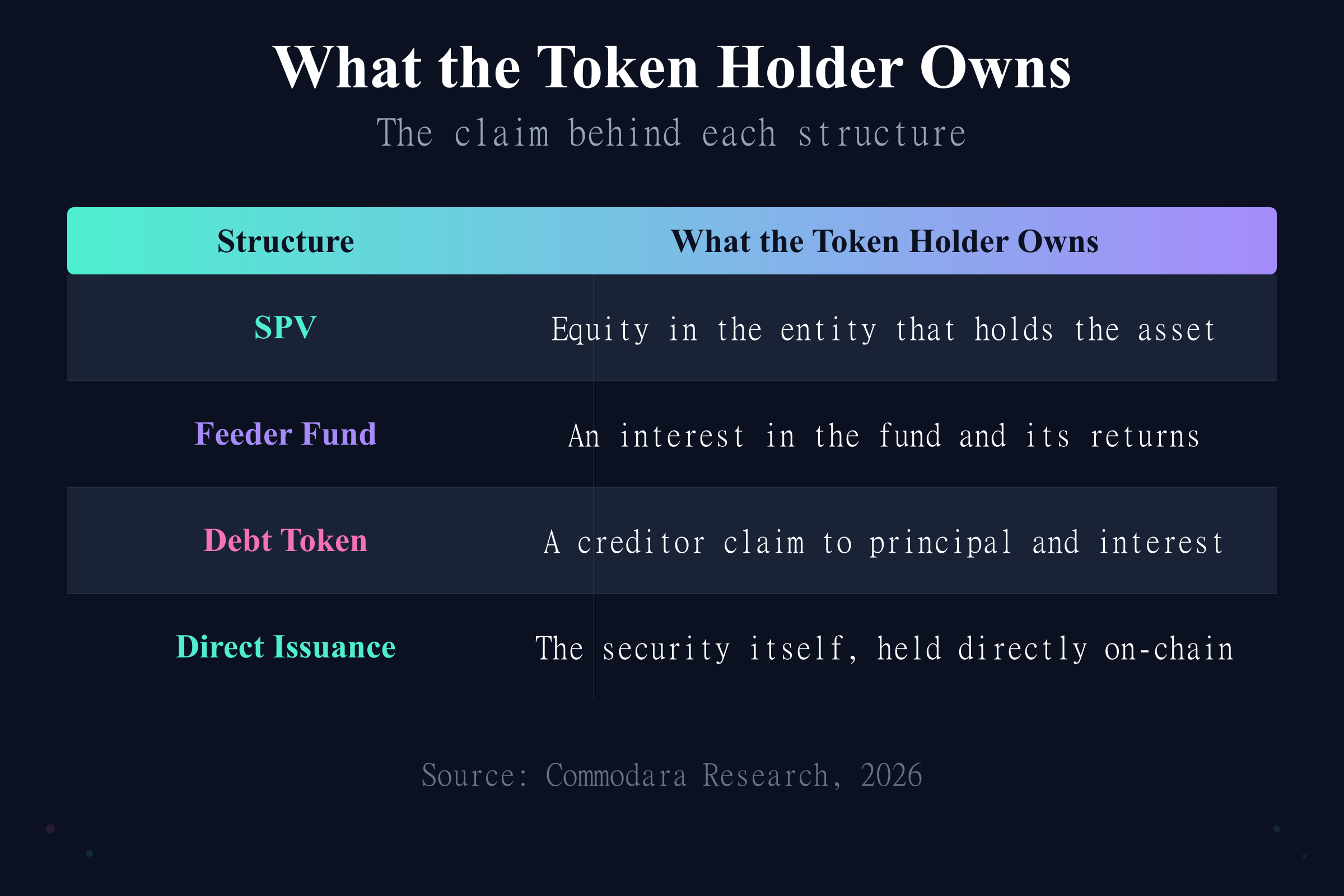
A tokenization structure is the legal and financial framework that connects a real world asset to the token that represents it. The token is a digital record; the structure is what gives that record legal meaning. It determines whether a token holder owns equity, a fund interest, a debt claim, or the asset itself.
The choice of tokenization structure is not a technical decision made by developers. It is a legal decision made with counsel, because it dictates which securities regulations apply, which investors qualify, how the asset is taxed, and how token holders are protected if something goes wrong. Global law firms such as Norton Rose Fulbright publish detailed guidance on how each structure maps to securities law across jurisdictions.
Four structures dominate the market: the special purpose vehicle, the feeder fund, the debt token, and direct issuance. Each solves a different problem, and each suits a different combination of asset class, investor base, and jurisdiction. Two tokens that look identical on-chain can carry entirely different rights depending on the structure beneath them.
The SPV Structure (Special Purpose Vehicle)
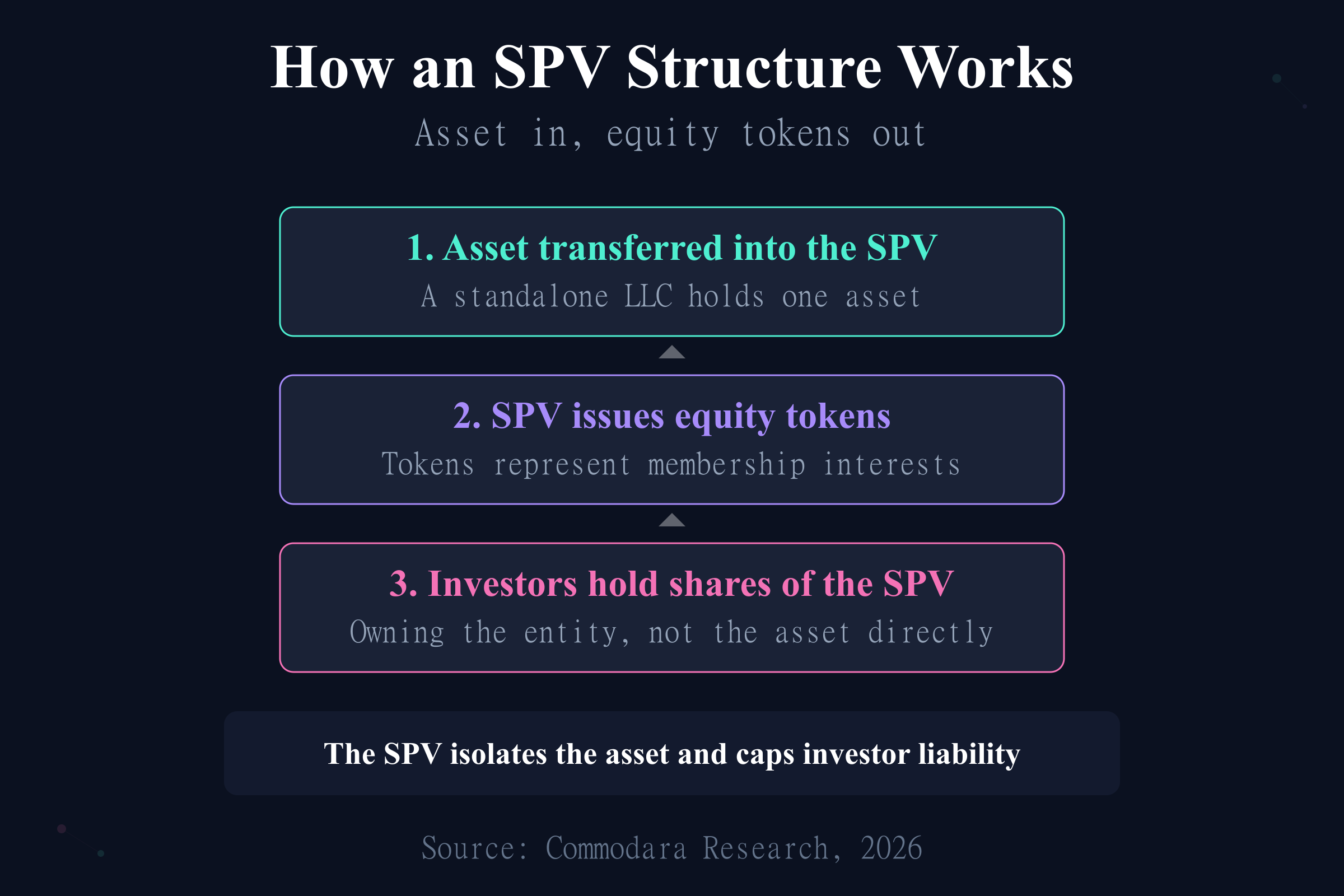
The special purpose vehicle is the most common structure for tokenizing individual assets, particularly real estate. An SPV is a standalone legal entity, usually a limited liability company, created for the sole purpose of holding one asset. The asset is transferred into the SPV, and tokens are issued that represent equity or membership interests in that entity.
When an investor buys a token in an SPV structure, they own a share of the company that owns the asset, not the asset directly. This layer of separation provides two benefits. It creates bankruptcy remoteness, meaning the asset is insulated from the issuer’s other liabilities, and it provides limited liability, so investors cannot lose more than their investment.
The trade-off is administrative. Each asset needs its own entity, which means legal formation, ongoing filings, and a cap table to maintain. For a single property or a discrete asset, the SPV is clean and well understood by regulators. Our detailed guide to structuring the legal entity behind your token covers the formation process, jurisdiction choice, and cap table mechanics in depth.
The Feeder Fund Structure
The feeder fund structure is designed to bring existing investment funds on-chain. In this model, a tokenized feeder fund pools investor capital and invests it into a larger master fund. Investors buy tokens in the feeder; the feeder holds an interest in the master; the master holds the actual portfolio.
This structure sits behind many of the largest tokenized products. Tokenized money market funds and private credit funds often use a feeder or fund-of-one arrangement so that on-chain investors can access a strategy that already exists in traditional form. Platforms such as Securitize have built much of their institutional business on this fund-wrapper model. The token represents an interest in the fund, and the investor receives the fund’s returns net of fees.
The feeder fund structure excels at distribution. It lets an asset manager open an existing fund to a new class of on-chain investors without restructuring the underlying fund. The cost is complexity: running two linked entities, with fund administration, NAV calculation, and audits at both levels. For managers tokenizing an established strategy, that complexity is usually worth it.
The Debt Token Structure
A debt token changes what the investor owns. Instead of equity or a fund interest, the token represents a debt claim: a note or bond issued by the entity, with a promise to repay principal and interest. The investor is a creditor, not an owner, and sits ahead of equity holders if the issuer defaults.
This structure dominates tokenized private credit and income products. When a platform tokenizes a loan portfolio or a revenue stream, it often issues debt tokens that entitle holders to a defined stream of payments. The appeal is predictability: a debt token has a stated yield and maturity, which is simpler to model than an equity claim on a fluctuating asset value.
Debt tokens also avoid transferring ownership of the underlying asset, which can simplify the legal structure in some jurisdictions. The risk is credit risk. A debt token is only as good as the issuer’s ability to pay, so due diligence shifts from asset valuation to the strength of the borrower and the quality of the underwriting.
The Direct Issuance Structure
Direct issuance is the most efficient structure and the most demanding. Here, the asset is issued natively as a token, with no SPV or fund wrapper in between. The token is the security. A tokenized bond issued directly by a corporate treasury, or tokenized shares issued directly by a company, are examples of direct issuance.
The advantage is that direct issuance removes a layer. There is no intermediary entity to form, administer, or reconcile, so settlement and ownership updates happen on-chain in a single step. Several institutional tokenized bonds have used this structure, settling directly on-chain without a traditional register.
The requirement is legal recognition. Direct issuance only works where the law recognizes the on-chain token as the definitive record of ownership. Jurisdictions such as Switzerland, Liechtenstein, and specific US states have enacted frameworks that permit this, but many have not. Where the law does not recognize a token as the security itself, an SPV or fund wrapper is still required to bridge the gap.
Direct issuance is where the market is slowly heading. As more jurisdictions pass legislation recognizing on-chain registers, the intermediary wrappers that exist today largely to satisfy legacy law become optional. For now, though, direct issuance remains the exception reserved for well-resourced issuers in supportive jurisdictions, while most tokenization still relies on an SPV or fund wrapper to stay on the right side of the law.
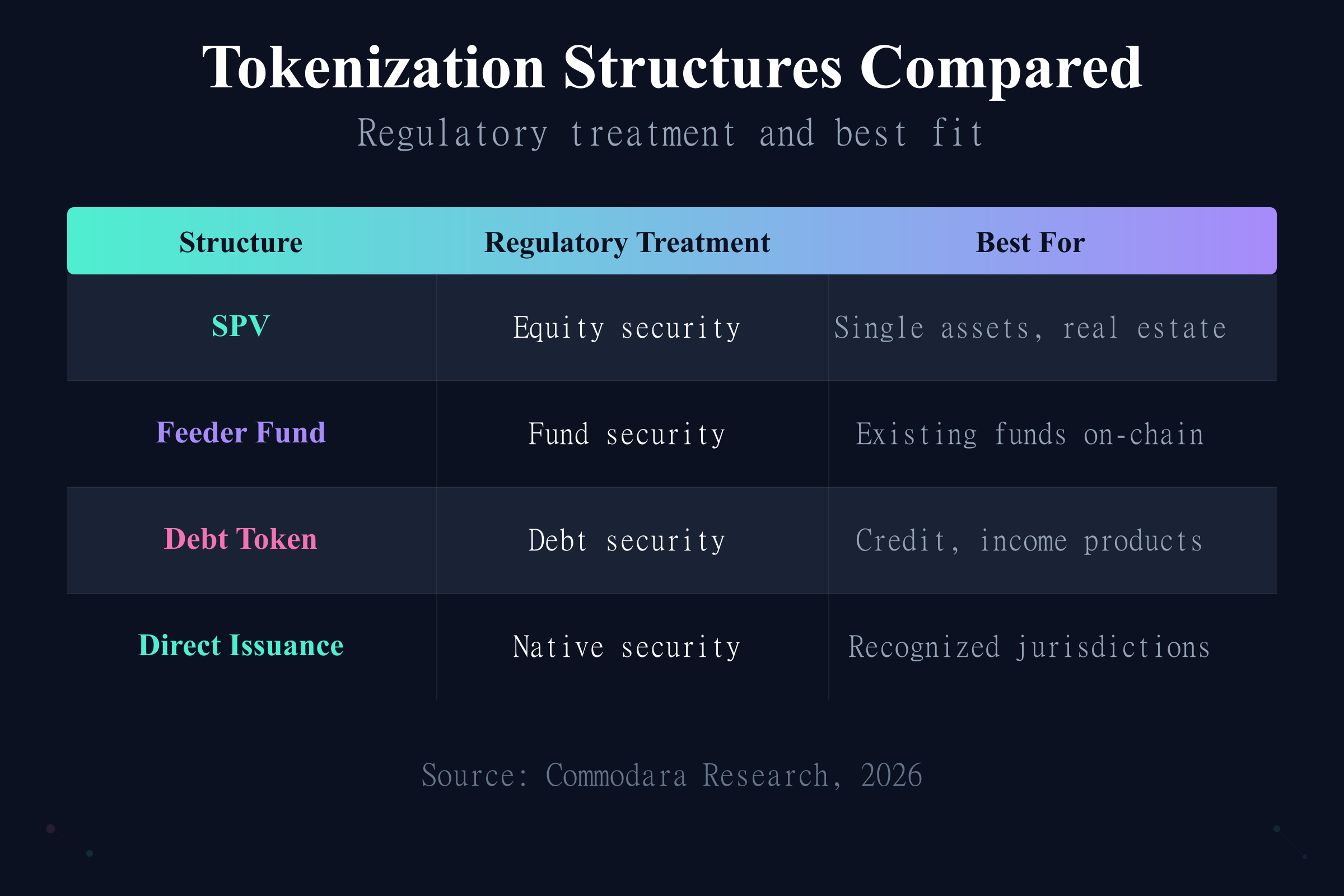
How to Choose the Right Tokenization Structure
Choosing among tokenization structures starts with the asset and the investor, not the technology. The right structure is the one that gives your target investors the rights they expect, satisfies the regulations in your jurisdiction, and matches the nature of the asset.
For a single physical asset such as a building, the SPV is usually the natural fit, and pairs well with the workflow in our framework for tokenizing real estate step by step. For opening an existing fund to on-chain investors, the feeder fund structure is the standard path. For income and credit products, debt tokens align the instrument with what investors are actually buying. For issuers in jurisdictions that recognize on-chain securities, direct issuance offers the cleanest and cheapest long-term structure.
Platform capability also shapes the decision, because not every platform supports every structure. Our comparison of the major tokenization platforms and what they support shows which providers handle SPVs, funds, and debt instruments. Before committing, it is worth taking time to assess your tokenization readiness across asset type, jurisdiction, investor base, and structure in one place.
A common mistake is letting the platform or the technology drive the choice. Teams pick the structure that is easiest to deploy, then find it does not give their investors the rights those investors expected, or does not qualify under the securities regime they need. Structure first, platform second. The legal form should follow the asset and the investor, and the technology should follow the legal form.
Frequently Asked Questions
What are tokenization structures?
Tokenization structures are the legal frameworks that connect a real world asset to its token. The four main models are the special purpose vehicle, the feeder fund, the debt token, and direct issuance. Each determines whether a token holder owns equity, a fund interest, a debt claim, or the asset itself.
What is the difference between an SPV and a feeder fund?
An SPV is a single-asset entity whose tokens represent equity in that entity, common for real estate. A feeder fund pools investors and invests into a larger master fund, common for bringing existing funds on-chain. SPVs suit discrete assets; feeder funds suit established strategies.
What does a debt token represent?
A debt token represents a creditor claim rather than ownership. The holder is entitled to repayment of principal plus interest, and ranks ahead of equity if the issuer defaults. Debt tokens dominate tokenized private credit and income products where a defined yield and maturity matter more than upside.
What is direct issuance in tokenization?
Direct issuance means the asset is issued natively as a token with no SPV or fund wrapper, so the token is the security itself. It is the most efficient structure but only works where the law recognizes an on-chain token as the definitive record of ownership, such as Switzerland or Liechtenstein.
Which tokenization structure is best?
There is no single best structure. The right choice depends on the asset, the target investors, and the jurisdiction. SPVs suit single assets, feeder funds suit existing funds, debt tokens suit credit products, and direct issuance suits issuers in jurisdictions that recognize on-chain securities.
The Bottom Line
Tokenization structures are the decision that shapes everything downstream. The token is easy to mint; the structure beneath it determines whether investors own equity, a fund interest, a debt claim, or the asset itself, and that choice governs regulation, taxation, liquidity, and investor protection.
The four structures are not competitors so much as tools for different jobs. An SPV wraps a single asset, a feeder fund opens an existing fund, a debt token packages income, and direct issuance removes the wrapper entirely where the law allows. Matching the structure to the asset and the investor is the difference between a tokenization that works and one that traps capital in the wrong legal form.
Before selecting among these tokenization structures, run your requirements through the Commodara Tokenization Readiness Tool to see which model fits your jurisdiction, investor base, and timeline. A structured assessment maps your asset and goals to the right tokenization structure before you commit legal and technical resources.